
2026 Top Copper Tungsten Electrodes Types Buyers Need
The 2026 market for copper tungsten electrodes is becoming more specification-driven. Buyers are no longer choosing only by price, finish, or catalog availability. They are comparing tungsten content, electrical conductivity, hardness, density, electrode geometry, and service temperature. Small differences can affect contact resistance, weld marks, tool life, and replacement frequency.
According to the U.S. Geological Survey’s Mineral Commodity Summaries 2025, global copper mine production reached approximately 22 million metric tons in 2024. The same report estimated global tungsten mine production at about 81,000 metric tons. These figures show why supply security matters. They also expose a weakness: raw-material availability does not guarantee consistent electrode quality. Powder purity, sintering control, and copper infiltration still require close inspection.
Mike Henry, BHP’s Chief Executive Officer, has stated, “You cannot decarbonise the world without copper.” His comment concerns the wider copper economy, not electrodes specifically. Yet it reflects a practical reality for manufacturers using electrical discharge machining, resistance welding, and high-current contacts. Reliable copper tungsten electrodes support demanding production environments where heat, arc erosion, and repeated impact meet.
This guide examines the main electrode types buyers may consider in 2026, including 50/50, 70/30, and 75/25 grades. It also compares conductivity, wear resistance, machinability, and application fit. Some purchasing decisions remain imperfect. A harder grade may last longer but conduct less efficiently. A cheaper electrode may create hidden downtime. Buyers should verify test data, not trust attractive claims alone.
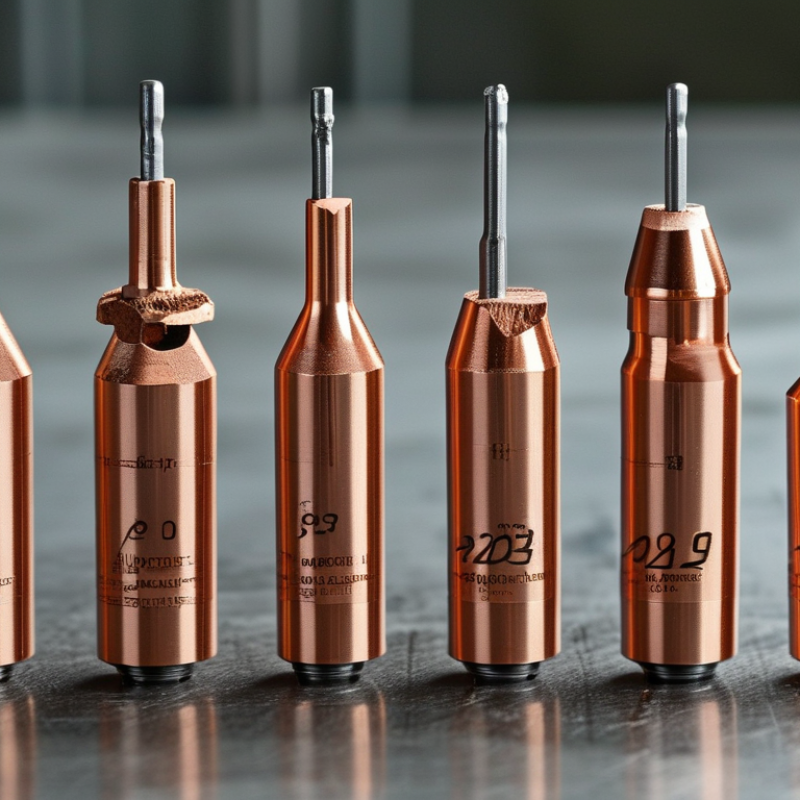
What Copper Tungsten Electrodes Are and Why Their Composition Matters
Copper tungsten electrodes combine two very different metals: conductive copper and hard, heat-resistant tungsten. Their performance depends on how these materials are proportioned and bonded.
A copper-rich grade transfers current efficiently and removes heat quickly. It suits applications requiring lower electrical resistance and smoother machining. A tungsten-rich grade withstands higher temperatures, pressure, and repeated electrical discharge. It usually offers better wear resistance, but conductivity decreases. That trade-off matters.
Composition is not just a percentage on a datasheet. It affects electrode life, surface finish, dimensional stability, and machining speed. In practical purchasing, I compare the tungsten content with the working current, contact pressure, and cooling conditions. A dense, well-processed structure also reduces cracking and uneven erosion. Small pores can become serious defects during repeated thermal cycles.
Different production methods create different results. Infiltrated electrodes may provide a useful balance between conductivity and strength. Powder-metallurgy grades can offer more uniform composition when manufacturing control is reliable. However, no type is ideal for every task. Real performance may change with electrode geometry, surface preparation, and duty cycle.
Test data still needs context. A value measured under one current range may not predict field performance. Buyers should request composition tolerance, density, hardness, electrical conductivity, and inspection records. I have found that choosing the hardest grade is not always the best decision. Excessive hardness can complicate machining and increase costs. A carefully matched composition often performs better than an impressive specification.
2026 Top Copper Tungsten Electrodes Types Buyers Need - What Copper Tungsten Electrodes Are and Why Their Composition Matters
Copper tungsten electrodes are refractory metal composites made by combining tungsten particles with a copper matrix. The tungsten fraction provides hardness, high-temperature strength, wear resistance, and low thermal expansion, while copper contributes electrical and thermal conductivity. The values below are typical reference ranges for commercially produced copper tungsten materials; exact performance depends on powder grade, infiltration or sintering method, density, electrode geometry, and operating conditions.
| Material Type | Nominal Composition (Weight %) |
Typical Density (g/cm³) |
Approx. Thermal Conductivity (W/m·K) |
Electrical Resistivity (µΩ·cm) |
Relative Hardness and Wear Resistance | Thermal Expansion (×10−6/K) |
Common Electrode Applications | Why Buyers Select It |
|---|---|---|---|---|---|---|---|---|
| CuW50 | 50% W / 50% Cu | Approximately 11.8–12.4 | 180–220 | 4.5–5.5 | Moderate hardness and wear resistance; highest copper-rich conductivity among the listed grades. | Approximately 9.0–10.5 | Electrical-discharge machining electrodes, general EDM tooling, moderate-duty contact parts, and heat-spreading components. | Balanced electrical conductivity, thermal conductivity, machinability, and cost for general-purpose use. |
| CuW60 | 60% W / 40% Cu | Approximately 12.7–13.4 | 170–200 | 4.8–6.0 | Higher hardness and arc-erosion resistance than CuW50, with good current-carrying capability. | Approximately 8.0–9.5 | Resistance-welding electrodes, EDM electrodes for hardened steels, electrical contacts, and moderate-to-high duty tooling. | A practical compromise when buyers need improved wear life without giving up too much conductivity. |
| CuW70 | 70% W / 30% Cu | Approximately 14.0–14.7 | 150–180 | 5.5–7.0 | High hardness, strong resistance to deformation, and improved resistance to electrical arcing and erosion. | Approximately 7.0–8.5 | High-current resistance-welding electrodes, EDM die-sinking electrodes, arc-resistant contacts, and high-wear inserts. | Suited to demanding thermal and mechanical duty where electrode life is more important than maximum conductivity. |
| CuW75 | 75% W / 25% Cu | Approximately 14.8–15.4 | 140–170 | 6.0–7.5 | Very high wear resistance and dimensional stability at elevated temperature; lower conductivity than copper-rich grades. | Approximately 6.5–7.8 | Severe-duty resistance-welding tips, high-energy EDM electrodes, high-voltage contact components, and erosion-resistant tooling. | Chosen for long service life, low deformation, and stable electrode geometry under intense heat and electrical loading. |
| CuW80 | 80% W / 20% Cu | Approximately 15.5–16.0 | 125–155 | 6.5–8.5 | Highest hardness, refractory content, and arc-erosion resistance in this comparison; more difficult to machine. | Approximately 5.8–7.0 | High-voltage switching contacts, severe arc-duty electrodes, specialized resistance-welding components, and high-temperature erosion parts. | Selected when maximum wear resistance, low thermal expansion, and high-temperature stability outweigh conductivity and machinability. |
Buyer’s selection guide: Copper-rich grades generally offer better electrical and thermal conductivity and are easier to machine. Tungsten-rich grades generally provide greater hardness, arc-erosion resistance, dimensional stability, and lower thermal expansion. For a final specification, buyers should confirm density, electrical resistivity, thermal conductivity, hardness, porosity, surface finish, tolerances, and the applicable testing standard with the material supplier.
Related Posts
-
What is the Importance of Copper Tungsten Electrodes in Modern Manufacturing
-
China Top 10 Water Chiller System Suppliers for Global Buyers?
-
What is a Water Chiller System and How Does It Work?
-
2026 Top Water Chiller Units for Global Buyers What to Consider
-
What is a Water Chiller and How Does It Work?
-

Top 10 Tips for Implementing Welding Automation in Your Business