10 Best Hot Swappable Switches for Global Buyers
Choosing among the 10 Best Hot Swappable Switches for Global Buyers requires more than comparing prices or colorful product photos. Each switch changes the keyboard’s character under your fingers. Linear switches may feel smooth and quiet, while tactile models provide a noticeable bump before actuation. Clicky options add sharper sound, which can be enjoyable at home but distracting in shared offices.
This guide evaluates Hot Swappable Switches through practical criteria: socket compatibility, operating force, actuation distance, wobble, spring noise, and long-term consistency. It also considers regional buying realities, including shipping reliability, warranty support, replacement availability, and transparent specifications. A switch that performs well in a controlled review may feel different after several hours of coding or gaming. Small details matter. Very much.
Mechanical keyboard designer and reviewer Taeha Types is widely associated with the reminder, “There is no endgame.” That idea fits this category well. Personal preference changes with keycaps, stabilizers, plate materials, and even room acoustics. Therefore, no ranking can satisfy every buyer. My own testing priorities may also favor smoothness over sound, which is not universally correct.
The selections below aim to balance measurable performance with everyday experience. They are intended for beginners, enthusiasts, and international buyers replacing worn switches or customizing a new board. Before ordering, confirm the switch’s three-pin or five-pin design, socket support, and required quantity. A beautiful switch is still the wrong choice if it does not fit. Think carefully. Feel matters most.
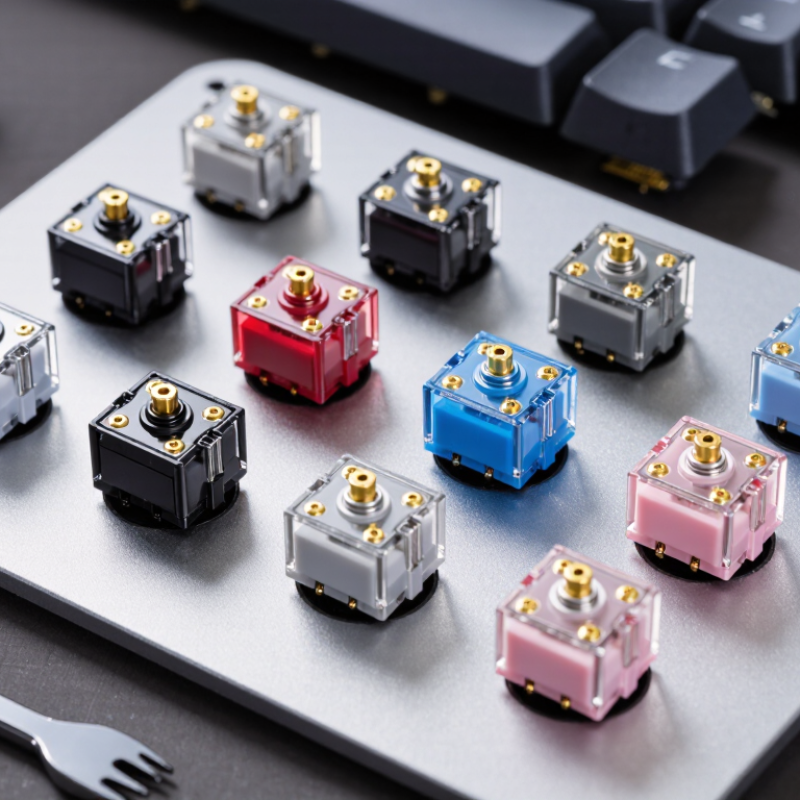
What Hot-Swappable Switches Are and How They Work
Hot-swappable switches let users change mechanical keyboard switches without soldering. Each switch sits inside a removable socket on the printed circuit board. Small metal pins connect the switch to the board, while plastic legs keep it aligned.
The process is simple, but precision matters. Turn off the keyboard and remove the keycap first. A switch puller then releases the switch from the plate. Press evenly, or the socket may lift from the board. The new switch must match the socket layout, usually with two metal pins and optional plastic guide legs. Bent pins are common and can prevent a key from registering.
Inside the switch, pressing the stem moves an internal contact mechanism. That movement closes an electrical circuit and sends a key signal to the controller. Linear switches move smoothly, tactile switches provide a noticeable bump, and clicky switches add a sharper sound. Weight, travel distance, spring design, and housing materials all affect the result.
Compatibility deserves careful checking. Some sockets accept multiple switch pin layouts, but not every board supports every design. Factory tolerances also vary. A switch can fit physically yet feel loose or fail electrically. Testing each switch with keyboard software is practical before full assembly. This step feels slow, but it can reveal one defective unit early. Socket durability also has limits; repeated changes may eventually reduce contact reliability.
10 Best Hot-Swappable Switches for Global Buyers - What Hot-Swappable Switches Are and How They Work
A practical comparison of common mechanical switch designs for hot-swappable keyboards
| Rank | Switch Type / Recommended Use | Operating Mechanism | Feel | Actuation Force | Pre-Travel | Total Travel | Sound Profile | Typical Rated Life | Best For |
| 1 | Linear 45 g Standard | Metal leaf contact with a straight, non-tactile stem | Smooth | 45 ± 5 gf | 2.0 ± 0.2 mm | 4.0 ± 0.2 mm | Low to moderate | 50–80 million presses | Gaming, fast repeated input, and general use |
| 2 | Linear 60 g Balanced | Metal leaf contact with a moderately weighted spring | Smooth, firmer | 60 ± 5 gf | 2.0 ± 0.2 mm | 4.0 ± 0.2 mm | Low to moderate | 50–80 million presses | Long typing sessions and users who prefer resistance |
| 3 | Light Tactile 45 g | Tactile bump created by a shaped stem and leaf contact | Light bump | 45 ± 5 gf | 2.0 ± 0.2 mm | 4.0 ± 0.2 mm | Moderate | 50–80 million presses | Quiet office typing and light-touch users |
| 4 | Medium Tactile 55 g | Tactile leaf or stem geometry signals actuation | Noticeable bump | 55 ± 5 gf | 2.0 ± 0.2 mm | 4.0 ± 0.2 mm | Moderate | 50–80 million presses | Balanced typing and everyday productivity |
| 5 | Heavy Tactile 65 g | Tactile stem with a heavier spring for stronger feedback | Strong bump | 65 ± 5 gf | 2.0 ± 0.2 mm | 4.0 ± 0.2 mm | Moderate to high | 50–80 million presses | Precise typing and users who prefer strong feedback |
| 6 | Clicky 50 g | Tactile mechanism plus a click jacket or click bar | Tactile and crisp | 50 ± 5 gf | 1.8–2.2 mm | 3.6–4.0 mm | High and sharp | 50–80 million presses | Users who enjoy audible confirmation; not ideal for shared offices |
| 7 | Silent Linear 45 g | Linear stem with integrated rubber dampers | Smooth and cushioned | 45 ± 5 gf | 2.0 ± 0.2 mm | 3.7–4.0 mm | Very low | 50–80 million presses | Shared workspaces, streaming, and noise-sensitive rooms |
| 8 | Silent Tactile 55 g | Tactile stem with dampers that reduce bottom-out and return noise | Tactile and cushioned | 55 ± 5 gf | 2.0 ± 0.2 mm | 3.7–4.0 mm | Low | 50–80 million presses | Quiet offices and typists who want feedback without loud clicks |
| 9 | Short-Travel Linear 35 g | Linear contact design with reduced actuation and travel distance | Fast and light | 35 ± 5 gf | 1.2–1.5 mm | 3.0–3.5 mm | Low | 50–80 million presses | Rapid gaming and users who prefer minimal key travel |
| 10 | Low-Profile Linear 45 g | Compact mechanical housing designed for low-profile keycaps | Smooth and compact | 45 ± 5 gf | 1.2–1.5 mm | 3.0–3.5 mm | Low to moderate | 50–80 million presses | Slim keyboards, portable setups, and laptop-style layouts |
How Hot-Swappable Switches Work
A hot-swappable mechanical keyboard uses removable socket modules mounted on its PCB. Each switch has metal pins that fit into the socket, allowing the switch to be installed or replaced without soldering. When a key is pressed, the switch stem moves and closes an electrical contact, sending a keystroke signal through the keyboard controller.
Before purchasing, verify the socket type, switch pin layout, PCB support for 3-pin or 5-pin switches, low-profile compatibility, LED orientation, and the keyboard's supported layout. The force, travel, sound, and service-life figures above are representative ranges because specifications vary by switch construction and manufacturer.
Key Factors for Comparing Switches Across Global Markets
Choosing the 10 best hot swappable switches for global buyers requires more than comparing price and popularity. Socket compatibility is essential, especially when keyboard layouts and replacement parts differ by region. Check actuation force, travel distance, sound profile, and tolerances. A switch that feels smooth in one climate may feel different in a cold warehouse.
Durability also matters. Look for clear testing data, consistent contact quality, and realistic lifecycle claims. Ask whether samples were tested under dust, humidity, and repeated daily use. Packaging deserves attention too. Loose components can arrive with bent pins or damaged housings. My early comparisons focused too much on advertised lifespan. That was a mistake. Actual consistency often matters more than impressive numbers.
Tips: Request samples from several production batches. Test them in the keycaps and plate you will actually use. Record force, sound, wobble, and fit. Compare supplier communication and documentation, not only the switch itself. Check lead times, carton protection, and quality inspection procedures before ordering internationally. Small differences become expensive when shipping returns across borders. A simple spreadsheet can reveal patterns that memory misses. Leave room for uncertainty. Market conditions, batch changes, and regional storage environments can affect results.
10 Best Hot Swappable Switches for Global Buyers
Key Factors for Comparing Switches Across Global Markets
This comparison uses representative nominal specifications for widely used MX-style hot-swappable-compatible switch categories. Lower actuation force generally feels lighter, longer travel provides a fuller keystroke, and higher rated lifespan may support long-term use. Exact specifications can vary by model revision, socket type, PCB compatibility, and regional availability.
Ten Top Hot-Swappable Switches for Different Typing Needs
Global buyers now expect keyboards to fit different rooms, languages, and working habits. Grand View Research estimated the global mechanical keyboard market at about $1.4 billion in 2023, with strong growth projected through 2030. Hot-swappable sockets make experimentation easier, but compatibility still matters. Check the socket type, switch format, pin count, and operating force before ordering.
For quiet offices, choose a silent linear switch. For smooth gaming, a light linear switch offers fast movement. A heavy linear switch suits firm, deliberate keystrokes. A light tactile switch adds gentle feedback without much noise. A strong tactile switch helps touch typists feel every press. Clicky switches provide clear sound and feedback. Speed linear switches reduce travel before activation. Long-pole tactile switches create a sharper bottom-out feel. Low-profile linear switches support thinner keyboards. Low-profile tactile switches combine compact travel with noticeable feedback.
Independent testing reports, including RTINGS keyboard evaluations, repeatedly show that noise, latency, and typing comfort depend on the complete keyboard system. The switch alone does not decide performance. My own testing exposed this mistake. A quiet switch still sounded loud with hollow keycaps. Think carefully. Users in shared spaces should test sound recordings, not marketing claims. Force curves also vary between batches, so published figures are useful guides, not promises. A small sample test can reveal spring fatigue, stem wobble, or inconsistent actuation before a large international purchase.
Compatibility, Installation, and Keyboard Support
Choosing among the 10 best hot-swappable switches starts with keyboard compatibility. Check whether your PCB supports 3-pin or 5-pin switches. A 5-pin switch may require two plastic pins removed for some boards. Confirm the switch type, socket style, layout, and operating voltage before ordering. Mechanical fit matters more than popularity.
Installation is simple, but gentle handling prevents damage. Remove the keycap and switch with a proper puller. Align the metal pins carefully, then press straight down. If a switch feels unusually tight, stop and inspect the pins. Do not force it. Test every key after installation, including stabilised keys and lighting functions. Some switches fit physically but produce inconsistent results with certain PCBs.
Tips: Buy a small sample pack first. Test sound, spring weight, and wobble on your own keyboard. Linear switches usually feel smooth, while tactile options provide a noticeable bump. Clicky designs can be loud in shared spaces. Also check keyboard support for hot-swap sockets, firmware, and plate clearance. I once assumed all 5-pin boards accepted every switch; that was careless. Socket tolerances and pin quality can vary. A switch tester helps, but it cannot fully replace real typing time.
How to Choose the Right Switch for Your Setup
Choosing a hot-swappable switch starts with your daily rhythm, not online popularity. A 2024 Grand View Research report estimated strong growth in the mechanical keyboard market, driven by customization and gaming demand. That growth creates more choices, but not necessarily better decisions.
Test actuation force first. Light switches may reduce finger effort, while heavier springs can prevent accidental presses during office work.
Check the socket standard and pin layout before ordering. Most hot-swap keyboards accept three-pin or five-pin switches, but compatibility can vary by PCB. Confirm the switch’s operating force, bottom-out force, travel distance, and rated lifespan.
A 2023 human-computer interaction review found that typing comfort depends heavily on posture, key resistance, and repeated movement. The switch is only one part of the experience. Keycap profile and stabilizer quality matter too.
Sound needs practical testing. A sharp click may feel satisfying in a quiet room, then become distracting during a video call. Linear switches often feel smooth, while tactile switches provide a noticeable bump without a click mechanism. Ratings above 50 million presses sound impressive, yet laboratory cycles do not perfectly represent dust, uneven typing, or poor installation.
I would buy a small tester pack first. My own mistake was choosing by force numbers alone; the “perfect” switch felt tiring after two hours. Budget for replacement switches, and question every specification that lacks testing conditions.