Best Process Chiller Solutions for Global Procurement Needs?
In today's competitive industrial landscape, the demand for efficient solutions is rising. Process chillers play a crucial role in maintaining optimal temperatures across various applications. They ensure the reliability of equipment and products while enhancing operational efficiency.
Selecting the right process chiller can be challenging, especially for global procurement needs. Factors like energy efficiency, capacity, and maintenance requirements must be considered. Companies often face difficulties because of varying regulations and standards across regions. Collaboration with experienced suppliers can mitigate these challenges.
Understanding market trends and technological advancements is essential in making informed decisions. The choice of a suitable process chiller not only affects operational costs but also impacts productivity. Reflecting on past experiences can help companies avoid common pitfalls in their procurement strategy. Investing time in research and supplier selection will pay off in the long run.

Overview of Process Chillers and Their Importance in Industry
Process chillers play a vital role in various industries, such as pharmaceuticals, food and beverage, and plastics. They offer precise temperature control, which is essential for maintaining product quality and process efficiency. According to a report by MarketsandMarkets, the global industrial chiller market is projected to reach USD 10.99 billion by 2025, growing at a CAGR of 5.5%. This significant growth highlights the increasing reliance on chillers in modern manufacturing.
Industries often face challenges when selecting process chillers. Factors like energy efficiency, maintenance needs, and cooling capacity must be considered. A study by the U.S. Department of Energy revealed that energy-efficient chillers can reduce energy costs by 30-50%. However, many companies still rely on outdated systems, leading to higher operational costs and environmental impact. It’s crucial to assess existing systems regularly to ensure they meet current demands.
Cost considerations also play a critical role in procurement decisions. Companies may opt for cheaper options, risking performance and reliability. A well-researched investment in quality equipment can lead to better long-term savings. As the industry evolves, finding the balance between upfront cost and long-term efficiency becomes increasingly complex.
Best Process Chiller Solutions for Global Procurement Needs
| Chiller Type |
Cooling Capacity (kW) |
Energy Efficiency (EER) |
Refrigerant Type |
Application Areas |
| Air-Cooled Chiller |
50-200 |
3.1 |
R410A |
HVAC, Process Cooling |
| Water-Cooled Chiller |
100-400 |
4.0 |
R134A |
Industrial, Chemical Processing |
| Evaporative Chiller |
75-300 |
3.5 |
R123 |
Power Plants, Data Centers |
| Scroll Chiller |
20-100 |
4.2 |
R410A |
Small Scale Cooling, Offices |
Key Considerations for Selecting a Process Chiller for Global Procurement
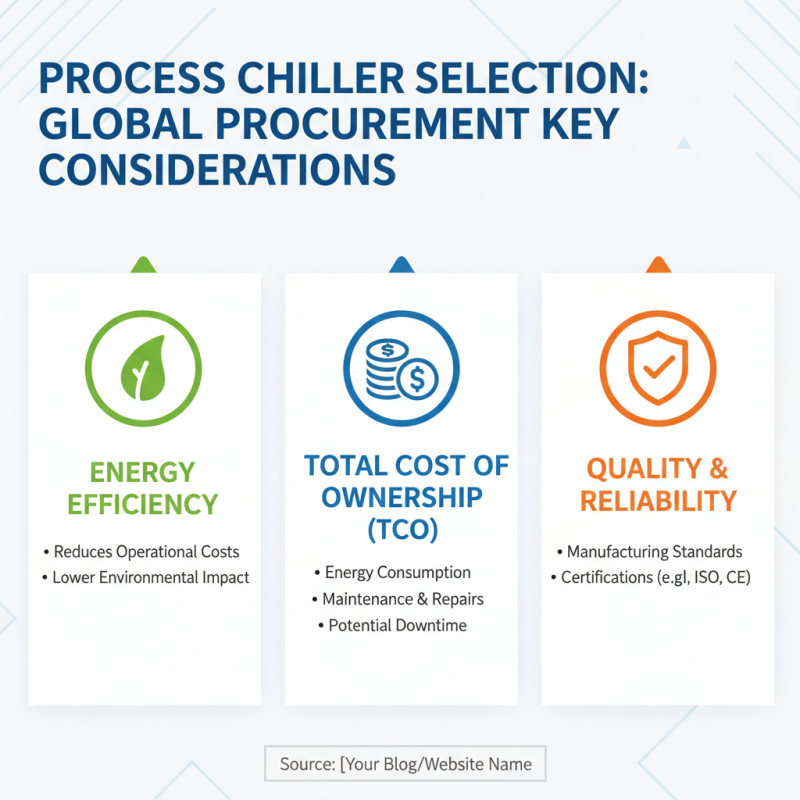
When selecting a process chiller, several key factors come into play. Energy efficiency is paramount. An efficient chiller reduces operational costs and environmental impact. Calculate the Total Cost of Ownership (TCO) over the chiller's lifespan. This includes energy, maintenance, and potential downtime costs. Quality and reliability are also crucial. Analyze the manufacturing standards and certifications of the chiller.
Tips:
1. Look for temperature control precision.
2. Prioritize chillers with robust insulation to enhance efficiency.
3. Assess the support and service availability in your region.
Another vital consideration is the cooling capacity. It must match the requirements of your processes. Oversizing or undersizing can lead to inefficiencies. Check the noise level, too. A quieter chiller may increase workplace comfort. Importantly, look for advanced features like smart controls and remote monitoring. These can optimize performance and prevent issues.
In buying decisions, balancing cost with features is essential. Sometimes less expensive options may require more maintenance. Reliability and energy consumption should not be compromised for the initial price. Think about your long-term needs, and be cautious about potential trade-offs. Each aspect requires careful reflection to ensure the right choice is made.
Top Process Chiller Technologies and Their Applications Across Sectors
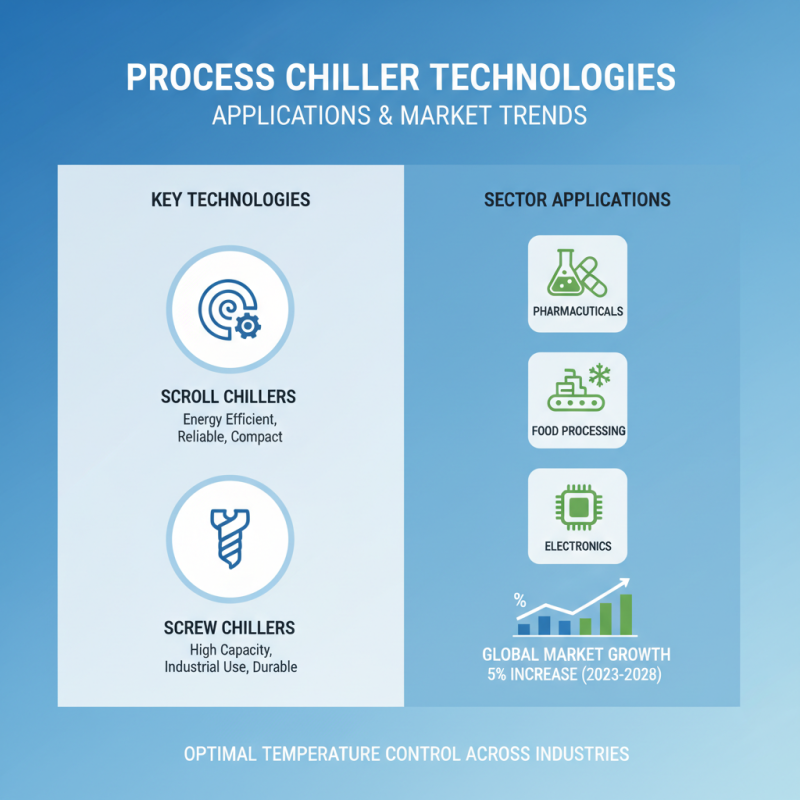
Process chillers play a vital role across various sectors, including pharmaceuticals, food processing, and electronics. These systems efficiently control temperatures, ensuring optimal operational conditions. Recent industry reports indicate that the global process chiller market is expected to grow by over 5% from 2023 to 2028. Key technologies, such as scroll and screw chillers, are gaining traction due to their energy efficiency and reliability.
Applications of process chillers vary significantly. In the pharmaceutical industry, precise temperature control is critical to maintaining the integrity of products. The food processing sector relies on chillers to preserve the freshness of perishable items. Moreover, in the electronics industry, cooling systems are essential to prevent overheating during production. Data suggests that improper temperature management can lead to a 20% decrease in product lifespan.
Despite advancements, challenges persist. Some existing chillers may become less efficient over time, leading to increased operational costs. A focus on maintenance and upgrades is essential. Organizations need to evaluate their systems regularly. Emerging technologies, such as IoT-enabled chillers, offer promises for efficiency improvements. However, implementation can be complex and requires careful planning. Frequent reviews of technology solutions can help meet evolving procurement needs effectively.
Leading Suppliers and Manufacturers of Process Chillers Worldwide
When it comes to process chillers, sourcing solutions from reputable suppliers is crucial. The global market for process chillers is projected to reach $5 billion by 2025, according to recent industry reports. This growth reflects the increasing demand across sectors such as pharmaceuticals, food and beverage, and manufacturing. Understanding supplier reliability can boost procurement efficiency.
Leading manufacturers often invest in advanced technologies for improved energy efficiency. A report by the International Energy Agency indicates that energy-efficient chillers can reduce energy costs by 20% to 30%. Many suppliers provide comprehensive support and maintenance services, which enhance reliability. However, some companies struggle with long lead times and inconsistent quality.
In the process chiller market, the challenge of balancing cost with performance remains significant. Buyers often hesitate between cheaper options and reliable, high-performance models. Suppliers must address these issues by ensuring transparency in their offerings. Continuous investment in R&D can foster innovation, enhancing performance and longevity. Each procurement decision should reflect these considerations for optimal operational efficiency.
Strategies for Effective Global Sourcing of Process Chiller Solutions
When sourcing process chillers globally, effective strategies are essential. Understanding diverse market dynamics is crucial for success. Countries may vary significantly in terms of availability, technology, or regulations. This variance can impact pricing and quality.
Building strong supplier relationships is key. Genuine partnerships create trust and transparency. Companies often overlook this aspect. A vendor with local expertise can provide invaluable insights. Engage them early in the process to mitigate risks. Communication is vital; establishing clear expectations can prevent misunderstandings.
Evaluating the total cost of ownership is another strategy. Often, businesses focus solely on initial purchase costs. Hidden costs in maintenance and energy consumption are frequently ignored. A process chiller might appear affordable but incur high operational expenses over time. Conducting thorough research on energy efficiency can yield long-term savings. Regularly reassess suppliers and market trends to adapt to changes. This approach fosters resilience in a fluctuating global landscape.
Best Process Chiller Solutions for Global Procurement Needs
This chart represents the average temperature control efficiency of various process chiller solutions used in global manufacturing. The data showcases the performance of chillers based on their cooling capacities.