China Best QR Code Reader Suppliers for Global Buyers?

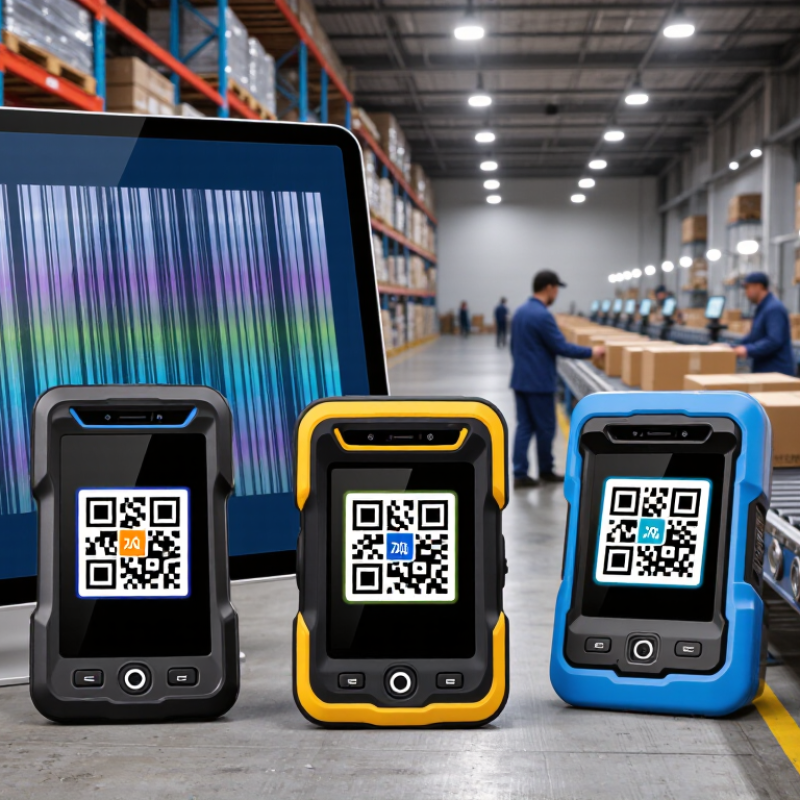
Choosing China’s best Qr Code Reader suppliers requires more than comparing unit prices. Global buyers need dependable scanning, stable software, clear documentation, and responsive technical support. A busy warehouse reveals weaknesses quickly: reflective packaging, damaged labels, dim aisles, and fast-moving cartons can challenge an inexpensive device.

Industry evidence supports this demand. The Research and Markets 2024 QR Codes Global Market Report identifies retail, logistics, healthcare, and manufacturing as important adoption areas. GS1’s Sunrise 2027 initiative is also encouraging businesses to transition from traditional barcodes toward richer two-dimensional codes. These changes increase the need for readers that handle QR codes, Data Matrix symbols, and conventional barcodes reliably. Performance matters more than appearance.

Masahiro Hara, the QR Code inventor, explained the original design goal clearly: “I wanted to make a code that could be read quickly.” That principle still guides supplier evaluation. Buyers should examine scan speed, decoding accuracy, USB or Bluetooth compatibility, IP ratings, battery life, and warranty terms. Factory testing, sample approval, and independent certification add practical confidence.

Yet supplier selection is not perfectly predictable. A strong specification can still miss real warehouse conditions. Request video demonstrations, test samples, and failure-rate records before placing a large order. Compare at least three Chinese manufacturers, not only trading companies. A reliable Qr Code Reader supplier should provide traceable product information, stable quality control, and support after delivery. That is where a promising quotation becomes a dependable global purchasing decision.

China Best QR Code Reader Suppliers for Global Buyers?

What Defines a Reliable QR Code Reader Supplier in China?

China Best QR Code Reader Suppliers for Global Buyers?

A reliable QR code reader supplier proves performance beyond a polished catalog. Buyers should request working samples, test reports, and production photos before placing large orders. Test scanning under bright light, dim warehouses, damaged labels, and angled distances. These conditions reveal more than ideal demonstrations.

Supplier expertise also appears in technical details. Confirm reading speed, supported code types, interface options, operating temperature, and enclosure protection. Ask how firmware updates are managed and how defective units are traced. A dependable supplier provides clear specifications, stable quality control, and responsive engineering support. However, no supplier is perfect. Delayed replies or vague test data deserve careful reflection.

Tips: Compare two or three samples using the same labels and lighting. Request a sample inspection checklist. Check whether serial numbers connect with production records. Discuss spare parts, warranty handling, and response times in writing. Visit the factory when possible, or arrange a live video audit. A low price can hide weaker sensors, inconsistent calibration, or costly replacement delays. Credible suppliers explain limitations openly. That honesty matters.

What Defines a Reliable QR Code Reader Supplier in China?

A reliable QR code reader supplier should demonstrate stable performance across QR codes with different error-correction requirements. The QR Code standard defines four error-correction levels: Low can restore approximately 7% of damaged codewords, Medium 15%, Quartile 25%, and High 30%. Buyers should confirm that readers are tested against these levels, together with consistent decoding speed, industrial durability, and integration support.

Reference: ISO/IEC 18004 QR Code specifications.

Key Types of QR Code Readers for Global Applications

Key Types of QR Code Readers for Global Applications

QR code readers are not interchangeable, even when they look similar. The right type depends on scanning distance, code condition, speed, and operating environment. Fixed-mount readers suit conveyor lines, access points, and automated kiosks. They capture codes from a stable position and support continuous processing. Good lighting control matters when labels reflect or move quickly. Fast and consistent.

Handheld readers offer flexibility in warehouses, retail counters, repair stations, and service vehicles. Operators can aim at damaged, curved, or poorly positioned codes. Corded models support steady workstations, while wireless units improve movement across large facilities. However, wireless performance may weaken near dense metal equipment or crowded networks. A practical trial is essential.

Mobile readers use smartphone-style cameras and work well for inspections, inventory checks, and field documentation. Embedded readers fit compact machines, medical equipment, payment terminals, and self-service systems. Rugged versions add sealed housings, impact resistance, and wider temperature tolerance for outdoor or industrial use. In field evaluations, I have seen buyers over-specify durability while ignoring decoding speed. That choice increases cost without improving daily results. Suppliers should provide interface details, illumination tests, sample scans, and support procedures for the destination market. Testing with actual labels is still more reliable than trusting a specification sheet.

How to Evaluate Chinese QR Code Reader Manufacturers

When evaluating Chinese QR code reader manufacturers, look beyond price and polished demonstrations. Grand View Research estimated the global barcode scanner market at over USD 7 billion in 2023, with continued growth through 2030. That demand attracts capable factories, but also inconsistent suppliers. Request test units and scan damaged, curved, glossy, and low-contrast codes. Measure decoding speed under warehouse lighting, sunlight, and dim retail conditions. A reliable supplier should provide ISO/IEC 18004 compatibility, documented optical specifications, firmware controls, and a clear quality inspection process. Ask for production records, not only sample photos.

Hardware details matter. Check the reader’s IP rating, drop resistance, operating temperature, cable strength, and trigger life. Review the SDK before placing a bulk order. It should support common systems and offer practical error messages. GS1’s Sunrise 2027 guidance is accelerating the use of 2D barcodes in retail, so future compatibility deserves attention. Confirm whether the manufacturer can update firmware without replacing devices. A low unit price may become expensive when integration support is weak.

Factory audits can reveal useful details. Observe calibration benches, aging tests, traceability labels, and packaging controls. Ask for defect-rate data from recent production batches. Be cautious with impressive claims. A fast scan in a showroom proves little. My own evaluation would include repeated scans after dust exposure and cable movement, although this test is imperfect. Supplier communication also matters. Slow answers before the contract rarely improve afterward. Consider warranty terms, spare parts, response time, and secure software-update procedures before selecting a long-term manufacturing partner.

Export Standards, Certifications, and Technical Support

For global buyers, choosing a QR code reader supplier means checking more than scan speed. Export readiness begins with controlled production, traceable components, and clear testing records. Ask for certificates matching the destination market and product type. Common documents may include CE, FCC, RoHS, or ISO 9001 evidence. Acceptance still depends on the target country. A certificate copy alone is not enough. Verify its scope, issue date, model number, and testing laboratory. In my procurement experience, mismatched model numbers often create avoidable customs and installation delays. Small detail, large consequence.

Technical support should continue after shipment. A dependable supplier provides manuals, interface guides, firmware procedures, and written response times. Confirm compatibility with USB, RS-232, Ethernet, or wireless systems before ordering samples. Ask how the reader performs under dim light, curved labels, damaged codes, and fast conveyor movement. Request tests using your actual packaging. Laboratory results may look excellent, yet factory conditions can expose glare or vibration problems. That gap deserves honest discussion. Remote diagnosis helps, but local service options may reduce downtime.

Tips: Build a compliance file for every model. Keep declarations, test reports, packing details, and serial-number records together. Request a pre-shipment inspection with documented results. Test a small batch first, then review scan accuracy and support response. Do not choose the lowest quotation automatically. A cheaper reader may require extra integration work. Ask whether spare cables and replacement units remain available for several years. Support promises need names, timelines, and escalation steps. Mistakes happen. Transparent correction matters more than polished claims.

China Best QR Code Reader Suppliers for Global Buyers? - Export Standards, Certifications, and Technical Support

A practical comparison framework for evaluating QR code reader suppliers, export readiness, compliance documentation, and after-sales support

Evaluation Area Technical or Export Requirement Relevant Standard, Document, or Certification Recommended Buyer Verification Typical Application Technical Support Expectation
QR Code Compatibility Support for QR Code Model 1 and Model 2, including common error-correction levels: L, M, Q, and H. ISO/IEC 18004 Request a decoding test report covering different sizes, orientations, contrast levels, and damaged-code conditions. Retail packaging, warehouse labels, traceability, ticketing, and industrial identification. Provide sample configuration files, decoding guidelines, and application-specific test support.
1D and 2D Symbology Coverage Common support may include QR Code, Data Matrix, PDF417, Aztec, Code 128, Code 39, EAN/UPC, and ITF. Symbology specifications should be identified in the product manual and decoder datasheet. Confirm the exact supported symbologies, minimum module size, maximum reading distance, and print-quality limits. Manufacturing, logistics, healthcare packaging, transport labels, and point-of-sale operations. Supply a validated symbology profile and guidance for application-specific code libraries.
GS1 Data Requirements Ability to process GS1 application identifiers when the device is used for regulated or supply-chain data. GS1 General SpecificationsGS1 DataMatrix Test parsing of identifiers such as GTIN, lot number, serial number, and expiry date according to the buyer’s data format. Consumer goods, pharmaceuticals, medical devices, food distribution, and inventory control. Offer sample data strings, parsing examples, and integration assistance for host software.
Image Sensor and Optics Verify sensor resolution, lens type, focal range, field of view, illumination, and motion tolerance. Product datasheet and engineering test report; performance is model-specific. Request test results for glossy surfaces, curved packaging, low contrast, direct part marks, and moving targets. Fixed-mount automation, handheld scanning, mobile workstations, and conveyor systems. Provide optical setup recommendations, lighting parameters, and mounting-distance guidance.
Ingress Protection Protection level should match the installation environment, such as indoor offices, warehouses, or washdown areas. IEC 60529
IP rating test documentation
Check whether the claimed IP rating applies to the complete reader, cable, connector, and accessories. Warehouses, production lines, food-processing areas, and outdoor logistics points. Explain installation limitations, sealing requirements, connector protection, and cleaning procedures.
Electrical Safety and EMC Electrical safety and electromagnetic compatibility must be assessed for the target market and power configuration. CEFCCUKCA
Applicable EMC and safety test reports
Request the Declaration of Conformity, test reports, product label information, and applicable model numbers. Commercial equipment, industrial control cabinets, retail systems, and automated machinery. Provide wiring diagrams, grounding instructions, power specifications, and EMC installation advice.
Laser or LED Safety For readers using laser aiming or illumination sources, confirm the applicable optical safety classification. IEC 60825-1IEC 62471
Depending on the optical source
Verify the optical classification, warning labels, user instructions, and test coverage for the shipped configuration. Handheld scanning, fixed-position readers, kiosks, and machine-vision stations. Provide safe-use instructions and replacement or configuration guidance for optical components.
RoHS and REACH Documentation Materials and restricted substances should meet the legal requirements of the destination market where applicable. EU RoHSREACH SVHC
Material declarations or laboratory reports
Confirm document validity, product scope, revision date, and whether cables and accessories are included. European imports, multinational procurement, electronics distribution, and OEM projects. Maintain controlled compliance documents and notify buyers about relevant component changes.
Connectivity and Interfaces Common interfaces include USB, RS-232, RS-485, Ethernet, keyboard emulation, and digital I/O on industrial models. Interface specifications, communication protocol manual, and electrical pinout documentation. Test baud rate, data format, cable length, connector type, trigger method, and host-system compatibility. POS terminals, PLC systems, warehouse management systems, and production equipment. Provide SDKs, command references, sample code, driver files, and remote integration assistance.
Data Security and Configuration Evaluate configuration access, firmware control, password protection, data formatting, and secure network communication where applicable. Product security statement, firmware-release policy, and network documentation for connected models. Ask how configuration backups, firmware updates, access permissions, and vulnerability notices are managed. Enterprise retail, healthcare, logistics platforms, and connected industrial systems. Offer controlled firmware packages, configuration backup procedures, and change-management information.
Export Packaging Packaging should protect the reader, cables, power supplies, and accessories from shock, moisture, and electrostatic damage. Commercial packing list, packaging specification, carton markings, and handling instructions. Review carton dimensions, gross and net weight, pallet configuration, spare-parts packing, and drop-test evidence where required. Sea freight, air freight, courier shipments, distributor deliveries, and project-based exports. Provide export packing photos, replacement-part identification, and damage-claim procedures.
Shipping and Customs Documents Documents normally include commercial invoice, packing list, transport document, country-of-origin information, and product classification data. Commercial invoice, packing list, certificate of origin when required, and HS classification reference. Confirm that consignee details, model numbers, quantities, declared values, and origin information are consistent. Import customs clearance, distributor supply, government procurement, and cross-border e-commerce. Assign an export contact to coordinate document corrections and shipment-related questions.
Quality Management A documented production and inspection process helps control firmware, optical performance, assembly, and final testing. ISO 9001
Certificate scope and validity should be checked.
Request the certificate, issuing body, scope, expiration date, incoming inspection method, and final-test records. OEM programs, repeat orders, regulated industries, and multi-site deployment. Provide inspection criteria, batch records, failure-analysis reports, and corrective-action support.
Warranty and Spare Parts Warranty terms should define coverage, exclusions, service procedure, replacement policy, and accessory coverage. Written warranty policy and after-sales service terms. Confirm warranty duration, return procedure, advance replacement availability, repair location, and spare-part lead time. High-volume deployments, retail networks, factory automation, and long-term projects. Provide remote diagnosis, replacement-unit assessment, repair tracking, and preventive-maintenance advice.
Integration and Deployment Support Successful deployment depends on compatibility with the host operating system, application software, PLC, POS, or WMS. SDK, API or command manual, driver package, configuration utility, and integration test checklist. Run a proof-of-concept using the buyer’s actual labels, working distance, lighting, host system, and operating speed. Automated production, warehouse receiving, retail checkout, kiosks, and document processing. Provide pre-sales engineering, sample units, remote commissioning, troubleshooting, and training materials.
Supplier Selection Priorities Technical performance, compliance evidence, delivery reliability, customization capability, and long-term support should be evaluated together. Supplier audit record, quality documentation, compliance file, reference project evidence, and service-level terms. Use a weighted scorecard covering decode performance, certifications, response time, MOQ, lead time, warranty, and total cost. Global sourcing, private-label programs, OEM integration, and industrial procurement. Request a named technical contact, escalation route, response-time commitment, and documented change-notification process.
Buyer Note: Certifications and regulatory requirements are model-, configuration-, and destination-market specific. Always verify the exact product model, accessories, firmware version, certificate scope, issuing organization, and validity date before placing an export order.

How Global Buyers Can Compare Quotes and Place Orders

China Best QR Code Reader Suppliers for Global Buyers?

Global buyers should compare more than unit prices. The 2024 GS1 Sunrise report shows strong industry momentum toward 2D barcodes by 2027. This shift affects scanner compatibility, software updates, and future replacement costs. Ask each supplier for a quotation with model number, scan engine, interface, operating range, warranty, and production lead time.

Request identical samples from at least three suppliers. Test damaged codes, glossy packaging, low light, and screens at different distances. Record scan speed and failed attempts. A quote showing “high performance” means little without test conditions. Juniper Research reported continued growth in digital wallet adoption, with billions of users expected globally by 2026. Buyers should therefore confirm support for common mobile payment and product-information codes, where legally applicable. Also compare shipping terms, minimum order quantity, spare parts, and payment milestones. The cheapest offer may become expensive after firmware problems or delayed customs documents.

Tips: Build a simple comparison sheet. Give every supplier the same technical brief. Request a video test before sampling. Check certificates independently. Confirm whether the quoted price includes packaging, software, and after-sales support. A small pilot order is safer than a large commitment. I have seen buyers overlook cable quality and mounting design. That mistake is easy to repeat. Leave room for uncertainty, especially when suppliers provide translated specifications.