China Top 10 CNC Precision Machining Companies
China’s Top 10 CNC Precision Machining Companies represent a manufacturing sector built on accuracy, consistency, and disciplined engineering. These suppliers serve industries that cannot tolerate careless dimensions, unstable processes, or weak traceability. Aerospace brackets, medical housings, automotive shafts, and electronic connectors may look small. Their production demands are not.
Professor Yusuf Altintas, a leading machining researcher, offers a useful perspective: “Machining is a science as well as an art.” That idea fits modern CNC Precision Machining. Software controls toolpaths, spindle speed, and cutting depth. Experienced engineers still interpret vibration, tool wear, surface marks, and material behavior. Machines follow instructions. People judge results.
This overview examines ten Chinese companies through practical criteria, including equipment capability, material experience, inspection systems, certifications, delivery performance, and communication. It also considers whether suppliers can support prototypes, repeat orders, and complex five-axis work. A polished website proves little. Measured parts matter more.
Some rankings may remain debatable. Public information is often incomplete, and supplier strengths can change quickly. A company with impressive equipment may lack dependable process control. Another may offer fewer machines but stronger quality records. That difference deserves attention.
The strongest CNC Precision Machining partners do more than remove metal. They manage tolerances, document inspections, reduce production risks, and respond when designs change. Buyers should still request samples, audit records, material certificates, and clear quotations. No list replaces verification. That is the uncomfortable truth.
What CNC Precision Machining Means in China’s Manufacturing Industry
China Top 10 CNC Precision Machining Companies
What CNC Precision Machining Means in China’s Manufacturing Industry
CNC precision machining converts digital designs into repeatable metal or polymer components. It supports aerospace, medical equipment, electronics, and industrial automation. According to China’s Ministry of Industry and Information Technology, manufacturing value added reached about 33.5 trillion yuan in 2023. This scale creates strong demand for controlled, measurable production.
Precision is not only a small tolerance on a drawing. It includes machine stability, tool compensation, material certificates, inspection records, and delivery consistency. The ISO Survey of Management System Standards reported millions of valid ISO 9001 certificates worldwide in 2023. Chinese suppliers often use this quality framework, but certification alone proves little. The inspection room matters.
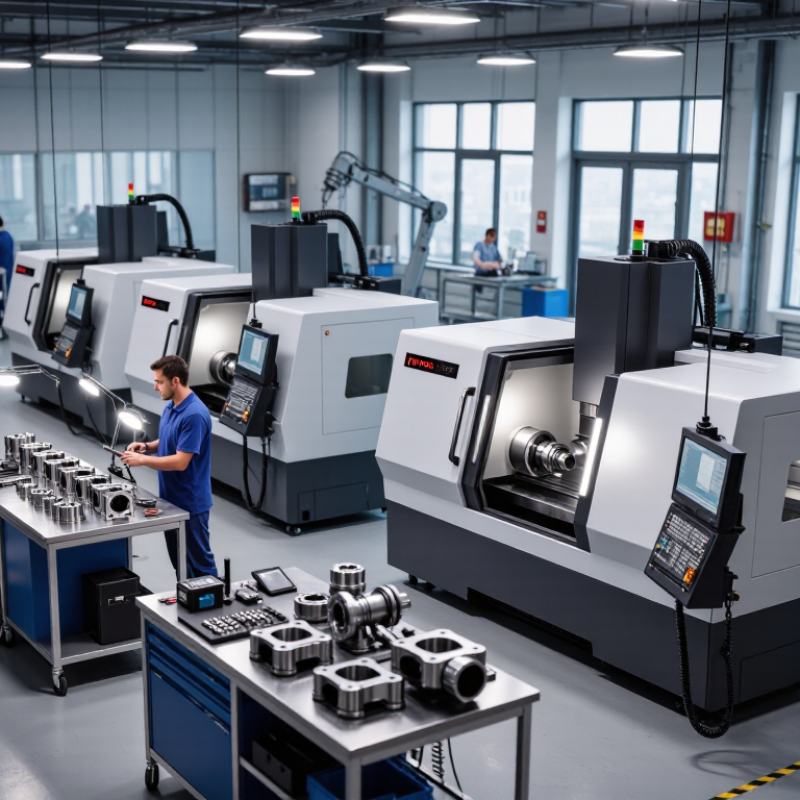
Real control appears on the shop floor. A coordinate measuring machine checks a machined housing after cutting. Operators compare bore diameter, surface finish, and positional accuracy against the drawing. UNIDO’s International Yearbook of Industrial Statistics 2024 places China’s share of global manufacturing value added at roughly 31 percent. That scale explains the depth of its machining ecosystem, from prototype workshops to high-volume plants.
A top-ten list should examine more than equipment photographs. It should compare tolerance capability, traceability, process validation, and response to design changes. No factory is perfect. In practice, unclear drawings and weak communication still cause avoidable rework. The best evaluation remains evidence-based: sample reports, audited processes, and verified production results.
China Top 10 CNC Precision Machining Companies — What CNC Precision Machining Means in China’s Manufacturing Industry
General linear dimensional tolerances for tolerance class “m” show how allowable variation increases with nominal part size. These standardized limits help define precision requirements for CNC-machined components.
The chart uses absolute tolerance limits in millimeters and does not represent company-specific performance. Actual CNC precision depends on machine configuration, material, tooling, measurement method, process control, and drawing requirements.
Source: ISO 2768-1:1989, Table 1, General Tolerances for Linear Dimensions, Class “m”; adopted in China through GB/T 1804.
Profiles of Ten Leading Chinese CNC Precision Machining Companies
China’s precision machining sector is broad, export-oriented, and increasingly automated. This review profiles ten leading Chinese CNC precision machining companies through measurable capabilities, not advertising claims. Names are omitted to keep attention on production evidence. The 2024 World Robotics report recorded 276,288 industrial robot installations in China during 2023, representing 51% of global installations. That scale supports faster material handling, inspection, and repeat production.
The profiles cover different strengths. One supplier focuses on five-axis milling for titanium aerospace brackets. Another specializes in medical stainless-steel parts with tight surface-finish controls. A third combines Swiss-type turning with automatic bar feeding for miniature shafts. Other profiles examine aluminum housings, optical mounts, mold inserts, and low-volume engineering parts.
Several facilities report ISO 9001 systems, while some also maintain sector-specific certifications. Buyers should verify certificate scope and expiration dates. A certificate alone proves little.
The strongest companies show calibrated CMM records, tool-life data, and traceable inspection reports. They also explain how operators handle burrs, heat distortion, and first-article approval. According to the 2024 World Manufacturing Production report from UNIDO, China remains the world’s largest manufacturing economy by industrial value added. That position creates supply depth, but not automatic quality.
Lead-time promises can change when material grades, fixtures, or inspection standards shift. Some profiles reveal this weakness openly. Their capability sheets lack clear process tolerances. That gap deserves careful questioning.
A practical audit should review sample parts, gauge calibration, nonconformance records, and response times before approving production.
How to Select the Right Chinese CNC Precision Machining Partner
Selecting the right Chinese CNC precision machining partner requires more than comparing the “Top 10” search results. A polished website is not proof of capability. Request recent sample parts, inspection reports, and material certificates. Check whether the supplier understands your drawing tolerances, surface finish, thread requirements, and production volume. A reliable partner should explain risks clearly, not promise everything immediately.
Tips: Ask for a pilot order before full production. Confirm machine capacity, inspection equipment, packaging details, and lead times in writing. Review how the team handles nonconforming parts and engineering changes. A coordinate measuring machine, calibrated tools, and traceable inspection records can reveal real process discipline. Also, ask who reviews your drawings. Small misunderstandings can create expensive delays.
Communication matters as much as equipment. During a factory audit or video call, observe whether engineers discuss tool wear, fixturing, burrs, and material distortion. These details show practical knowledge. Still, no supplier is perfect. Even a capable workshop may miss a difficult tolerance or underestimate shipping time. That is why clear acceptance criteria and regular production updates are essential. Consider time-zone response speed too. Fast replies are useful, but accurate replies matter more.