Essential Tips for Choosing the Right Welding Equipment?
Choosing the right welding equipment can be overwhelming. The options vary greatly, making it difficult for newcomers. From MIG to TIG, every type serves a purpose.
Good welding equipment is vital for quality work. Selecting the wrong gear can lead to poor results. For example, a beginner may struggle with advanced equipment. Their skills and the equipment should align for optimal outcomes.
It's important to consider your specific needs. What materials will you be welding? What is your experience level? These questions guide your decision. Understanding the basics can help avoid costly mistakes. Effective research will lead to reliable choices.
Understanding Different Types of Welding Processes and Equipment
When selecting welding equipment, understanding the various welding processes is crucial. Each method offers unique advantages suited for different applications. For example, MIG welding is popular for its speed and simplicity. It uses a continuous wire feed, making it ideal for beginners and light fabrication projects. Conversely, TIG welding provides precision. It uses a non-consumable tungsten electrode. This method can be more difficult but produces high-quality, clean welds.
Another aspect to consider is the type of materials you'll be working with. Stick welding is versatile and effective on dirty or rusty metal. It's often favored in construction and repair. However, it can lack the finesse of other techniques. Knowing the differences helps in making informed choices.
Moreover, the equipment itself varies significantly in complexity and cost. Some welders might feel overwhelmed by high-end options. It’s essential to assess your skill level and the project requirements. Higher price tags don't always mean better results. Reflecting on personal experience and project needs can lead to better decisions. Choose wisely, and don't rush into purchases.
Essential Tips for Choosing the Right Welding Equipment
Key Factors to Consider When Choosing Welding Equipment
When selecting the right welding equipment, several key factors require careful consideration. The type of welding project you undertake influences the equipment choice significantly. For example, while MIG welding is ideal for automotive applications, TIG welding excels in high-precision tasks. According to the American Welding Society, over 50% of welders prefer MIG for its speed and ease of use.
The material you plan to weld is another critical factor. Steel, aluminum, and stainless steel all have unique requirements. Each material may demand specific welding machines and techniques. A recent industry report highlighted that welders often face challenges with heat control, especially when working with aluminum. Understanding these nuances can greatly improve outcomes.
Safety is paramount in welding operations. Ensuring the equipment is compliant with the latest safety standards is essential. Regular maintenance checks can prevent accidents. Reports indicate that improper equipment management leads to nearly 30% of workplace injuries in welding. Careful attention to these elements ensures not only better performance but also a safer working environment.
Assessing Your Project's Requirements for Proper Equipment Selection
When selecting welding equipment, understanding your project's specific requirements is crucial. Different welding techniques—like MIG, TIG, or stick welding—demand distinct tools. According to the American Welding Society, nearly 60% of professionals reported that inadequate equipment led to project delays and cost overruns. Knowing the right equipment can save time and money.
Begin by assessing the materials you'll weld. For instance, aluminum requires a different approach than steel. Additionally, consider the thickness of the materials. A thicker metal might need a more powerful welder, like a MIG machine, while thinner sheets could suffice with a TIG welder. Many professionals overlook this aspect, leading to inefficiencies that could have been avoided.
Safety is another important factor. Standard reports indicate that over 30% of welding accidents stem from using inappropriate equipment. Ensure that the chosen equipment meets safety standards and fits the skill level of your team. Take the time to match the tools with the job requirements. This not only enhances productivity but also ensures a safer working environment.
Essential Tips for Choosing the Right Welding Equipment
| Project Type |
Required Equipment |
Power Source |
Material Thickness |
Recommended Safety Gear |
| Metal Fabrication |
MIG Welder |
Electric |
1/8" to 1/4" |
Welding Helmet, Gloves |
| Automotive Repair |
MIG Welder/TIG Welder |
Gas |
18 Gauge to 1/8" |
Safety Glasses, Ear Protection |
| Pipe Welding |
Stick Welder |
Electric |
Schedule 40 to Schedule 80 |
Respirator, Welding Jacket |
| Artistic Projects |
TIG Welder |
Gas |
1/16" to 1/8" |
Face Shield, Cut Resistant Gloves |
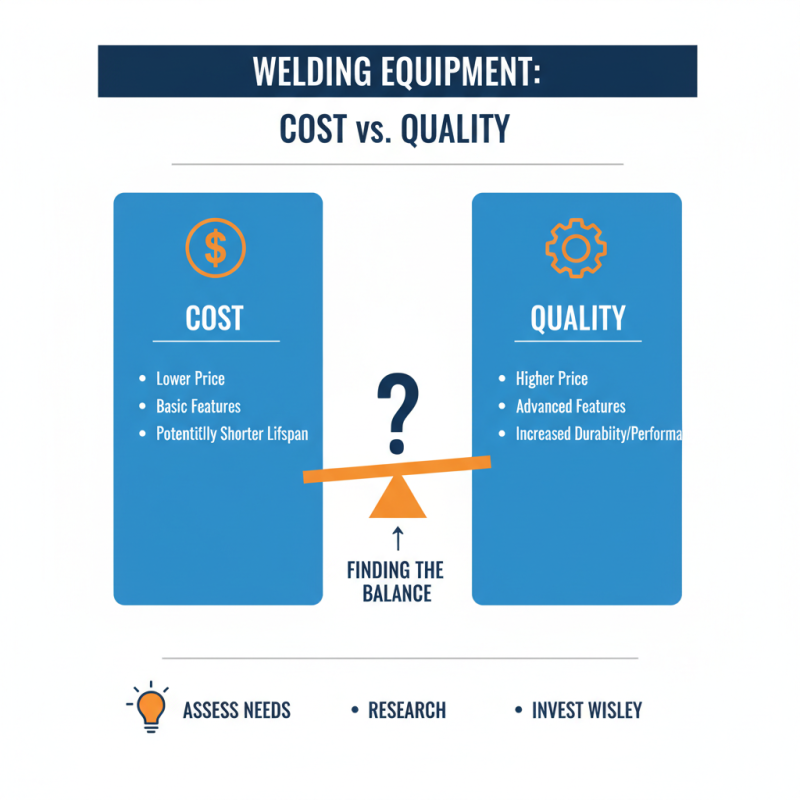
Budget Considerations: Cost vs. Quality in Welding Equipment
When selecting welding equipment, budget plays a crucial role. Balancing cost and quality can be challenging for many welders. Higher-priced tools often promise better durability, but this doesn't always translate to better performance. It's essential to assess whether the extra features are necessary for your projects.
Tips: Consider the type of welding you’ll do most often. Different techniques may require specific equipment. Second, check the warranty offered. A longer warranty can be a sign of quality. Additionally, research user reviews to gather insights from professionals and hobbyists alike.
Many welders find themselves faced with tough choices. Investing in high-quality gear can prevent frequent replacements. However, it's vital to ensure that you're not overspending on features you won't use. Reflect on your needs and project scope before making a decision. Sometimes, a more affordable option may yield satisfactory results without compromising safety.
Safety Features and Compliance Standards in Welding Equipment Selection
Selecting the right welding equipment requires careful consideration of safety features. Research by the American Welding Society indicates that 29% of welding accidents are related to equipment malfunctions. Therefore, ensuring that safety mechanisms are in place can significantly reduce risks. This includes protective gear, adequate ventilation, and emergency shut-off systems.
Compliance with industry standards is crucial. Equipment should meet guidelines set by organizations like OSHA and ANSI. These standards help provide a framework for what constitutes safe welding practices. Non-compliance can lead to serious injuries or fatalities. Being aware of the latest safety regulations can drastically improve workplace safety.
However, not all safety features are foolproof. For instance, welders often neglect to maintain their equipment. A report from the National Fire Protection Association found that improperly maintained equipment contributes to nearly 15% of welding-related fires. Regular inspection and maintenance are essential. It's important to remember that safety is not solely about technology; it's also about the user's actions and practices.