What is an Industrial Chiller and How Does It Work?
Industrial chillers play a crucial role in various sectors, including manufacturing, food processing, and pharmaceuticals. According to Statista, the industrial chiller market is projected to reach $10.8 billion by 2025. This growth reflects the increasing need for efficient cooling solutions in many applications.
These systems operate by removing heat from a liquid through a vapor-compression or absorption refrigeration cycle. They maintain desired temperatures for processes such as product cooling and climate control in facilities. However, many industries still struggle with energy efficiency and operational costs. A report by the U.S. Department of Energy notes that chillers can account for about 40% of a facility's energy consumption, highlighting room for improvement.
Understanding how industrial chillers function is vital. Proper maintenance can lead to significant energy savings. Still, many companies overlook this aspect. As industries continue to expand, the focus on energy-efficient chillers will become increasingly necessary. The challenge lies in balancing performance with sustainability.
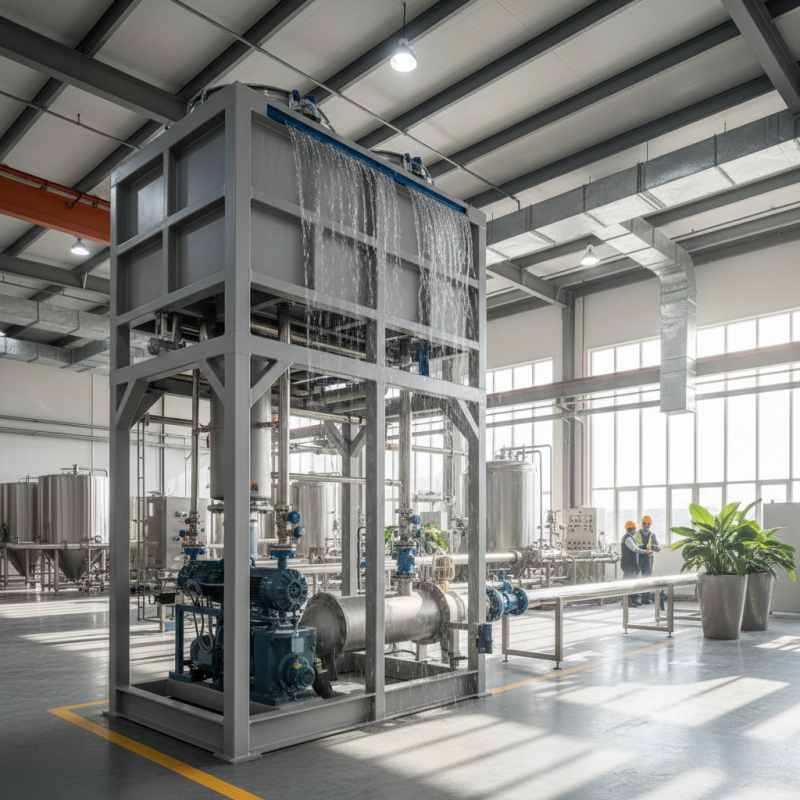
What is an Industrial Chiller: Definition and Purpose
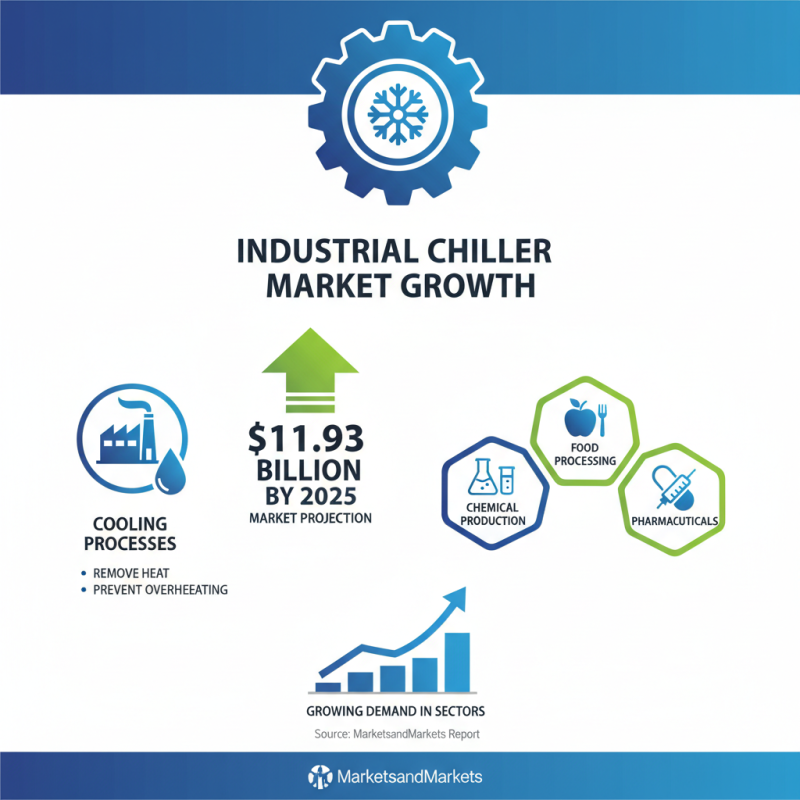
Industrial chillers play a crucial role in cooling processes across various industries. They are designed to remove heat from liquids, preventing overheating in equipment or manufacturing processes. According to a recent report by MarketsandMarkets, the industrial chiller market is projected to reach $11.93 billion by 2025, reflecting a growing demand in sectors such as food processing, chemical production, and pharmaceuticals.
The primary purpose of an industrial chiller is to ensure optimal operation and efficiency. In production lines, maintaining specific temperature ranges is vital. For example, food processing requires precise cooling to preserve quality. Tennessee Valley Authority data indicates that improper cooling can lead to a 10% loss in product quality. Thus, investing in reliable chillers is essential for businesses aiming to maintain standards and reduce waste.
However, not all chillers are created equal. Many facilities struggle with energy efficiency. Approximately 30% of chillers operate at subpar efficiency levels due to lack of maintenance or outdated technology. This can lead to increased operational costs. Regular servicing and upgrades are often necessary to avoid such pitfalls. Balancing initial investment with long-term savings remains a challenge for many industries.
Key Components of an Industrial Chiller and Their Functions
Industrial chillers play a vital role in various manufacturing processes. They are designed to remove heat from liquids, ensuring that equipment operates efficiently. The main components of an industrial chiller include the compressor, condenser, evaporator, and expansion valve. Each component has a specific function that contributes to the chiller's overall performance.
The compressor is the heart of the system. It compresses refrigerant gas, raising its temperature and pressure. This high-pressure gas then flows into the condenser. Here, it dissipates heat and condenses into a liquid. The evaporator absorbs heat from the liquid that needs to be cooled, allowing the refrigerant to evaporate and return to gas form. Finally, the expansion valve regulates the flow of refrigerant into the evaporator, maintaining optimal pressure and temperature.
Tip: Regular maintenance is crucial. Check the refrigerant levels and inspect components for wear and tear. Small issues can lead to bigger problems.
Operating an industrial chiller isn't without challenges. For example, improper sizing can lead to inefficiencies. A chiller that's too small will overwork, while a large one may cycle on and off too often. It’s important to assess your cooling needs accurately.
Tip: Monitor the system for unusual noises or vibrations. These could signal that something is amiss. Identifying issues early can save time and money.
How Industrial Chillers Work: The Cooling Cycle Explained
Industrial chillers play a crucial role in maintaining optimal temperatures in various manufacturing processes. Understanding how they work can enhance efficiency. The cooling cycle is where the magic happens. It relies on the principles of thermodynamics.
Refrigerant flows through the system, absorbing heat from the environment. This process occurs in the evaporator, where the refrigerant changes from liquid to gas. As it absorbs heat, the fluid cools down significantly. Then, the compressor pushes the gas to the condenser. Here, it releases heat and turns back into a liquid. This cycle repeats continuously, creating a consistent cooling effect.
Tips: Regular maintenance is essential. Clean the condenser coils to improve efficiency. Small issues can escalate quickly, leading to costly repairs. Monitoring refrigerant levels can prevent system failures.
Many industries report that efficient chillers can lower energy costs by 20%. However, not all chillers are created equal. Some may consume more energy than necessary. Investing in a high-efficiency model pays off in the long run. This choice leads to lower operational costs and reduced environmental impact.
Industrial Chiller Data Table
| Chiller Type |
Cooling Capacity (kW) |
Efficiency (EER) |
Refrigerant Type |
Application |
| Air-Cooled Chiller |
300 kW |
3.1 |
R410A |
Manufacturing |
| Water-Cooled Chiller |
500 kW |
4.2 |
R134A |
Data Centers |
| Portable Chiller |
50 kW |
2.8 |
R407C |
Event Cooling |
| Centrifugal Chiller |
1000 kW |
5.0 |
R1234ze |
Large Facilities |
Types of Industrial Chillers and Their Applications in Various Industries
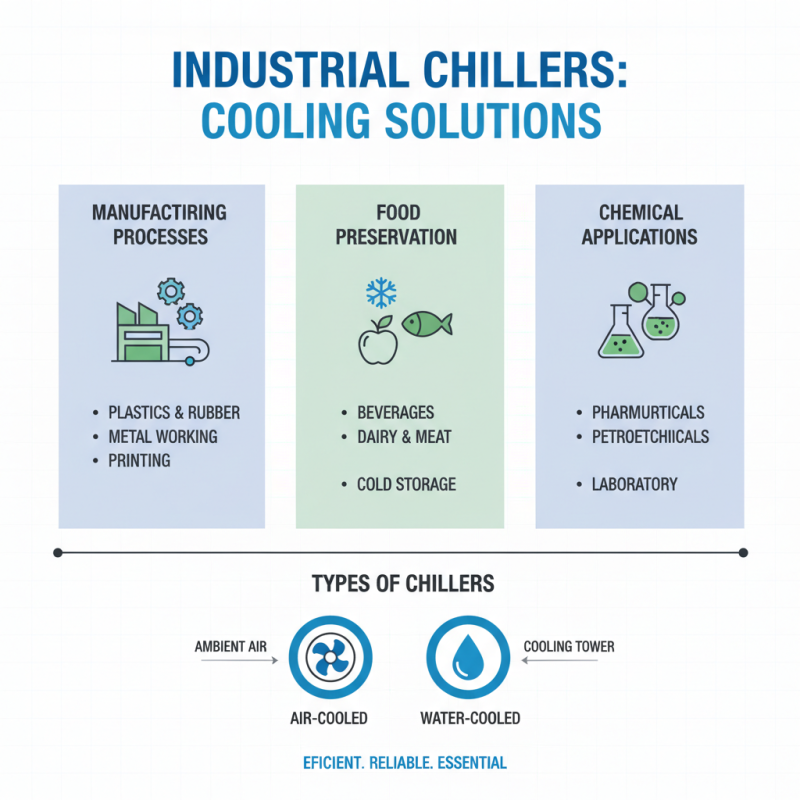
Industrial chillers play a crucial role in various sectors. They provide efficient cooling solutions for manufacturing processes, food preservation, and chemical applications. Understanding the types of chillers helps industries select appropriate systems for their needs.
There are two primary types of industrial chillers: water-cooled and air-cooled. Water-cooled chillers are efficient for large operations, often used in chemical plants and refineries. They rely on a cooling tower to dissipate heat. Air-cooled chillers, on the other hand, are suitable for smaller facilities or when outdoor space is limited. They draw in air, making them versatile for industries like food processing and pharmaceuticals.
Tips: Regular maintenance is critical. Neglected systems can lose efficiency. Data shows that 30% of energy costs in plants relate to cooling systems. Monitoring temperature and pressure can reveal inefficiencies. Consider investing in energy management systems for better oversight.
Industries are unique, each with distinct requirements. Some may find water-cooled chillers cost-effective but struggle with maintenance. Maintaining the right balance of performance and cost is vital. Selecting incorrect types can lead to operational inefficiencies and unnecessary expenses. Understanding these aspects is essential for optimal performance.
Efficiency Metrics: Performance Standards for Industrial Chillers
Efficiency metrics are essential for evaluating industrial chillers. These metrics provide benchmarks that help industries optimize their cooling processes. According to the U.S. Department of Energy, proper sizing and efficiency of chillers can reduce energy consumption by up to 30%. An efficient chiller uses less electricity, translating to significant cost savings.
Chillers are evaluated on several performance standards, including COP (Coefficient of Performance) and EER (Energy Efficiency Ratio). A higher COP indicates better efficiency. Industry studies show that chillers with a COP of 6.0 or higher are considered high performance. Data also reveal that maintenance affects performance dramatically, with neglected chillers losing up to 25% efficiency over time. Regular maintenance ensures chillers operate near their rated efficiency.
Adopting advanced technologies can enhance performance. For instance, variable speed drives can improve efficiency under varying load conditions. However, many facilities still rely on outdated systems. This hesitance can lead to inefficiencies. Embracing innovation is key, yet some industries hesitate, fearing upfront costs. Balancing investment with potential savings is crucial for long-term success in chiller operations.
Efficiency Metrics for Industrial Chillers
This bar chart illustrates the efficiency metrics of various industrial chillers based on their Coefficient of Performance (COP) values. Higher COP values indicate greater efficiency.