China Top Copper Tungsten Manufacturers for Global Buyers
China has become a major sourcing base for copper tungsten materials and components. Global buyers often look for stable quality, flexible production, and practical export support. This guide introduces manufacturers serving industries such as electrical contacts, resistance welding, aerospace equipment, and high-temperature tooling.
The best suppliers do more than quote a low price. They should explain tungsten content, copper grade, density, hardness, conductivity, and dimensional tolerances clearly. Factory experience matters when a component must survive repeated arcing, heat, or mechanical pressure. A reliable manufacturer can usually provide material certificates, inspection records, sample approval, and traceable production details.
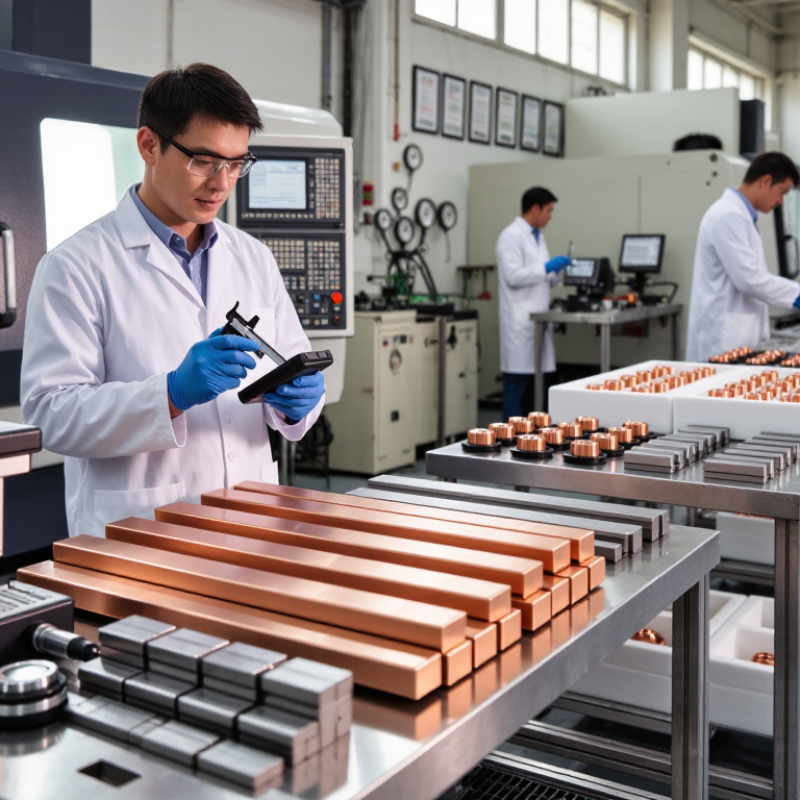
Look for evidence, not polished promises. A serious supplier may share workshop images, testing equipment, process controls, and customer-specific case experience. Vacuum infiltration, powder metallurgy, machining, and finishing methods can affect performance significantly. Buyers should confirm whether the quoted grade matches the drawing and application.
Small details matter. A 0.05-millimeter tolerance can change assembly results. Packaging also deserves attention, especially for precision contacts moving across long supply routes. Communication speed is useful, but technical accuracy matters more.
No supplier is perfect. Some websites provide limited test data, while some product descriptions remain overly general. That uncertainty should invite questions, not immediate rejection. Independent inspection, trial orders, and written specifications can reduce avoidable risk. This overview helps global buyers compare China’s copper tungsten manufacturers with greater confidence, while keeping technical needs, supplier transparency, and long-term reliability in view.
Copper Tungsten: Composition, Properties, and Industrial Uses
Copper tungsten is a powder-metallurgy composite, not a simple alloy. It usually contains 50–90% tungsten by weight, with copper filling the metallic network. Tungsten provides hardness, density, and resistance to arc erosion. Copper supplies electrical and thermal conductivity. The balance is difficult. More tungsten improves wear resistance, but it can reduce conductivity and machinability.
The material performs well in electrical contacts, resistance welding electrodes, high-temperature switches, and heat-spreading components. Its low thermal expansion helps protect nearby ceramics and semiconductors. Its performance also depends on particle size, infiltration quality, porosity, and surface finishing. Small processing defects can create hot spots. They are easy to miss during visual inspection.
Market pressure supports careful sourcing. The USGS Mineral Commodity Summaries 2024 reported about 22 million metric tons of global copper mine production in 2023. The same report placed global tungsten mine production near 78,000 metric tons. These figures show very different supply scales and sourcing risks. Buyers should request composition data, density results, conductivity values, and test conditions. A reported conductivity number means little without its measurement standard. In practice, a cheaper grade may fail sooner under repeated arcing. That possibility deserves more attention.
China Top Copper Tungsten Manufacturers for Global Buyers – Copper Tungsten: Composition, Properties, and Industrial Uses
Nominal tungsten content and calculated theoretical density for common copper tungsten compositions.
Copper tungsten is a metal matrix composite in which tungsten provides high hardness, wear resistance, and thermal stability, while copper contributes electrical and thermal conductivity. The density values shown are theoretical calculations based on the rule of mixtures using pure tungsten density of 19.25 g/cm³ and pure copper density of 8.96 g/cm³; actual products may vary because of porosity and manufacturing processes. Higher tungsten content is commonly selected for electrical contacts, resistance-welding electrodes, EDM components, and high-temperature heat-management parts.
How to Evaluate Copper Tungsten Manufacturers in China
When global buyers compare copper tungsten manufacturers in China, price should not lead the decision. A capable supplier should explain powder grades, tungsten content, pressing methods, and machining limits. Ask for density, hardness, electrical conductivity, and dimensional tolerance data for the exact grade. Generic brochures are weak evidence. Request recent inspection reports and sample results. Technical answers should match the factory’s equipment and actual production process.
Tips: Request three production samples from different batches. Check electrode surfaces under magnification for pores, cracks, or uneven infiltration. Confirm whether testing uses calibrated instruments and recognized procedures. Review quality certificates, but verify their scope and validity. Visit the facility, or arrange an independent audit. A video call helps, but it cannot replace records.
Reliable evaluation also includes traceability and communication. Each batch should connect raw materials, furnace records, inspection results, and packing labels. Ask how rejected pieces are isolated and how corrective actions are documented. Delivery promises need evidence from previous export orders, not confident emails. No evaluation method is flawless; even a successful sample can hide batch variation. A technically strong factory may still provide unclear English drawings. Use controlled drawings and written acceptance criteria. I would not ignore small inconsistencies. They often reveal larger process gaps.
China’s Leading Copper Tungsten Manufacturing Regions and Capabilities
China’s copper tungsten industry is concentrated around several practical manufacturing regions. Jiangsu and Zhejiang combine powder metallurgy with precision machining. Their factories commonly produce electrodes, contacts, and wear-resistant components. Guangdong adds strong electronics, tooling, and export-support capabilities. Hunan and Jiangxi benefit from tungsten-processing knowledge and established powder supply networks. Regional strengths overlap. No province does everything equally well.
In Jiangsu, buyers may find advanced CNC machining, vacuum sintering, and dimensional inspection. Zhejiang suppliers often respond quickly to customized drawings and smaller production runs.
Guangdong facilities can support high-volume electrical and electronic applications. Hunan and Jiangxi suppliers may offer stronger control over tungsten powder preparation and material consistency. Typical copper tungsten grades include different tungsten percentages for conductivity, hardness, and arc resistance. Manufacturing quality depends on more than the stated grade.
Ask for density results, electrical conductivity data, hardness records, and dimensional reports. Review sample parts under actual service conditions. Check whether the supplier controls mixing, pressing, sintering, infiltration, and final grinding. A clean factory is useful evidence, but it is not proof of stable production. Audits sometimes reveal excellent equipment with incomplete process records. That gap deserves attention. Regional reputation helps, yet batch-level traceability remains more reliable. Carefully compare samples, inspection methods, packaging, and response speed before approving a long-term source.
Export Services, Pricing Factors, and Global Buyer Considerations
For global buyers, selecting a China-based copper tungsten manufacturer requires more than comparing online prices. Experienced suppliers should explain powder grades, tungsten content, copper ratio, density, and machining tolerance. Ask for recent inspection records. A reliable exporter can provide samples, material certificates, dimensional reports, and clear production photographs. These details help buyers judge whether quoted performance matches actual factory capability.
Export service often determines whether a technically suitable order arrives smoothly. Confirm packaging, moisture protection, labeling, pallet dimensions, and loading methods before signing. The supplier should state shipping terms, lead time, port options, and required documents in writing. Common documents include commercial invoices, packing lists, certificates of origin, and inspection reports. Import duties and customs rules vary by destination, so buyers should verify them independently. Do not rely on assumptions. A capable sales team can coordinate freight, but the buyer remains responsible for local compliance.
Pricing depends on copper and tungsten market movements, purity, density, shape, tolerance, order volume, and processing complexity. Tooling and special machining may appear as separate charges. Request a price breakdown, validity period, minimum order quantity, and payment schedule. A low quote can hide expensive packaging, testing, or expedited freight. That risk is easy to miss. In practice, even careful forecasts fail when specifications change after sampling. Leave room for revision, especially regarding delivery dates and raw material surcharges. The clearest total landed cost is often more useful than the lowest figure.