
Choosing an Industrial Quadcopter is rarely a simple comparison of flight time and camera resolution. Global buyers need dependable machines for inspection, mapping, emergency response, agriculture, and infrastructure maintenance. A strong manufacturer must deliver more than impressive specifications. It should provide tested hardware, clear documentation, responsive service, and practical training.
Colin Snow, founder of Drone Analyst, stated, “Drones are not a technology story. They are a business story.” That view remains useful when reviewing industrial suppliers. A quadcopter may look powerful in a product video, yet field performance tells a different story. Buyers should examine battery availability, payload stability, obstacle sensing, weather resistance, software integration, and repair procedures. Small details matter. A loose connector, delayed firmware update, or missing spare battery can stop a project.
This guide compares leading Industrial Quadcopter manufacturers for international buyers. It considers engineering capability, production consistency, support networks, and operational experience. It also examines how manufacturers serve different industries and regional requirements. No ranking is flawless. Pricing changes, product lines evolve, and local service quality can vary sharply. That limitation deserves attention.
The best choice depends on the mission, not the loudest marketing claim. A mining survey may need endurance and accurate positioning. A bridge inspection may require stable imaging near steel structures. Buyers should test shortlisted systems under realistic conditions before making a large investment. Careful evaluation reduces risk and supports safer, more reliable operations.
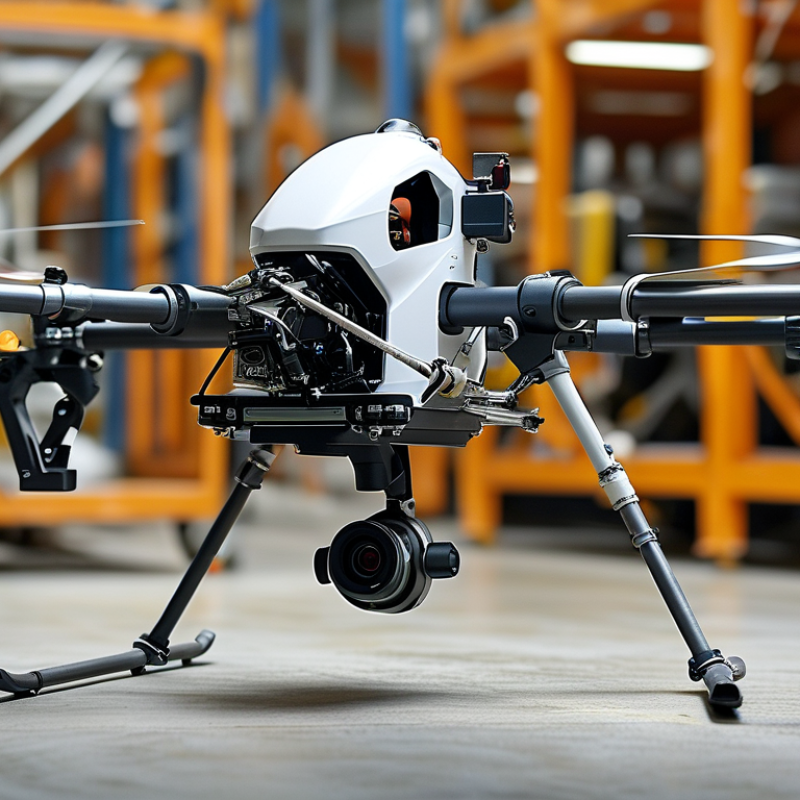
Industrial quadcopter selection starts with MTOW, not camera resolution. Maximum takeoff weight includes the aircraft, battery, payload, and accessories. A heavier platform may carry more equipment, but it can increase transport costs and reduce flight time. Payload should be tested at the intended altitude and wind speed. Laboratory figures often look generous.
Fortune Business Insights valued the commercial drone market at about USD 20.8 billion in 2023, with strong growth forecast through 2030. That growth increases demand for measurable specifications, not vague claims. Endurance should state whether the battery lands at zero or retains a safety reserve. Twenty-five minutes on paper may become eighteen minutes in cold weather. MTOW also affects local operating limits and site planning. Check the numbers.
IP ratings require equal care. Under IEC 60529, IP65 means dust-tight protection and resistance to water jets. It does not mean safe submersion. IP54 offers less protection against dust and water. Buyers should request test conditions, nozzle distance, water pressure, and certification records. Drone Industry Insights identifies inspection, mapping, and surveying as major commercial applications, where repeated exposure to dust and rain is common. A high IP rating still cannot repair poor maintenance. I would question any endurance or payload claim without a field test.
Top Industrial Quadcopter Manufacturers for Global Buyers
Buyer Metrics: Compare 30–50-Minute Flight Claims and Sensor Payloads
Flight-time claims need careful reading. A stated 30–50 minutes usually assumes mild wind, a new battery, and minimal payload. Real work adds weight quickly. A thermal camera, mapping sensor, protective cage, and mounting hardware can reduce endurance noticeably. Ask whether the figure includes takeoff, hovering, and landing reserves. It should.
Use a controlled field test before comparing suppliers. Fly the same route with identical battery levels and payload weights. Record wind speed, temperature, altitude, and remaining charge. Small details matter. A quadcopter carrying a 1.5-kilogram sensor package may perform very differently from a bare aircraft. One test can mislead.
Sensor payloads also require more than resolution figures. Check thermal sensitivity, optical zoom, stabilization, geotagging accuracy, and data compatibility. For surveying, confirm ground sampling performance at the intended altitude. For inspection work, examine low-light behavior and image distortion. Payload power draw deserves attention too. Our spreadsheet is never perfect. Battery aging, dust, and repeated takeoffs can change results after several months. Request independent test records, maintenance intervals, calibration procedures, and clearly defined warranty terms. A supplier that explains weak points openly may deserve more trust than one offering only impressive numbers.
Global industrial quadcopter buyers now compare more than flight time. They assess autonomy, service networks, payload integration, and data security. Drone Industry Insights’ 2024 market analysis places the commercial drone sector near US$30 billion, with strong growth across inspection, mapping, and public infrastructure. That demand favors manufacturers with proven field experience, not only attractive specifications.
A Chinese mass-market leader typically offers broad ecosystems and competitive production scale. A United States autonomy specialist emphasizes obstacle avoidance, automated workflows, and dependable fleet control. Another Chinese enterprise supplier focuses on thermal payloads, surveying tools, and industrial support. A French developer is known for compact systems and efficient mapping operations. A Japanese manufacturer often prioritizes domestic reliability, careful testing, and integration with established industrial processes. These profiles are useful, but imperfect. Regional service quality can change the buying decision.
Tips: Request three field references, not three brochures. Check battery cycle data, repair times, software updates, and payload compatibility. MarketsandMarkets projects the commercial drone market will grow strongly through 2030, yet reported growth does not guarantee operational value. Buyers should test performance in wind, dust, weak network coverage, and low-temperature conditions. Document the results. One overlooked workflow issue can erase a large equipment discount.
The chart summarizes the number of profiled industrial quadcopter manufacturers, out of five, with publicly documented support for each capability. Product availability varies by model, payload, region, and configuration.
Top Industrial Quadcopter Manufacturers for Global Buyers
For United States operations, FAA Part 107 covers small unmanned aircraft weighing less than 55 pounds at takeoff. The 55-lb figure equals about 25 kilograms, but it is not an empty-aircraft limit. Batteries, cameras, sensors, landing gear, and payloads all count. A quadcopter listed at 24 kilograms may exceed the threshold after installation. The rule sounds simple. Real payload planning is not.
Industrial buyers should request a documented maximum takeoff weight, not only a catalog shipping weight. Ask for battery specifications, payload limits, test conditions, and configuration drawings. In practical procurement reviews, a spreadsheet can be wrong by several hundred grams. That margin may affect the aircraft’s regulatory category and operating process. Part 107 compliance also involves pilot certification, registration, airspace requirements, and operational limits. FAA rules do not automatically govern every country, so local aviation authorities require separate checks.
Tips: Build a fully loaded weight sheet before purchase. Weigh the aircraft with its largest approved battery and working payload. Keep a safety margin below 55 pounds. Confirm whether optional equipment changes the approved configuration. Do not rely on marketing language alone; request dated technical records and compliance support from the manufacturer.
| Buyer Screening Dimension | Below 55 lb (25 kg) MTOW | At or Above 55 lb (25 kg) MTOW | Required Verification Evidence | Procurement Risk |
|---|---|---|---|---|
| FAA weight classification | The aircraft may qualify as a small unmanned aircraft for operations conducted under Part 107, provided all other requirements are satisfied. | The aircraft is outside the normal Part 107 small-UAS weight limit and requires a separate FAA regulatory pathway. | Aircraft data sheet showing maximum takeoff weight, including battery, payload, accessories, and other installed equipment. | Configuration-dependent |
| Maximum takeoff weight calculation | Must remain at or below 55 lb at takeoff. Payload, batteries, cameras, protective equipment, and optional modules count toward the limit. | Any configuration that reaches or exceeds 55 lb should be reviewed before commercial operation in the United States. | Tested weight schedule for each approved payload and battery combination; calibrated-scale records where available. | High |
| FAA operator framework | Commercial and other covered operations can generally use Part 107 when the remote pilot, aircraft, and operation meet the rule’s requirements. | Part 107 cannot be assumed solely because the aircraft is a quadcopter. The operator must confirm the applicable FAA authorization and operating framework. | Written regulatory assessment identifying the intended FAA operating authority and any required exemption, waiver, or approval. | Conditional |
| Remote pilot qualification | A person manipulating the controls for a covered Part 107 operation generally needs a valid FAA remote pilot certificate or must operate under the applicable supervision rules. | Qualification requirements depend on the authorization used and the aircraft’s operational category. | Remote pilot certificate, recurrent-training record, operating manual, and role assignment matrix. | Conditional |
| Aircraft registration | Most unmanned aircraft operated under FAA jurisdiction must be registered before operation, subject to limited exceptions. | Registration and aircraft-status requirements must be confirmed under the applicable FAA pathway. | FAA registration record, registration number, aircraft serial number, and ownership documentation. | Conditional |
| Remote Identification | Generally requires Standard Remote ID, an FAA-accepted Remote ID broadcast module, or operation within an FAA-recognized exception area when the applicable conditions are met. | Remote ID obligations may still apply, but the aircraft’s operating authorization and equipment configuration require additional review. | Declaration or compliance documentation, module details where applicable, firmware version, and FAA registration linkage. | Conditional |
| Operating altitude | Part 107 operations are generally limited to 400 ft above ground level, with a limited allowance when operating within 400 ft of a structure. | Altitude limits depend on the applicable FAA authorization and the operating environment. | Mission-planning controls, geofencing configuration, altitude-alert settings, and standard operating procedures. | Verifiable |
| Visual line of sight | Part 107 generally requires the remote pilot or a designated visual observer to maintain unaided visual line of sight, unless an approved alternative applies. | Beyond-visual-line-of-sight operation requires a separate regulatory and safety review. | Concept of operations, visual-observer procedures, communications plan, and any applicable FAA approval. | Conditional |
| Night operations | Night operations under Part 107 are permitted only when the applicable lighting, knowledge, and operational requirements are met. | Night operation must be evaluated under the aircraft’s specific authorization and risk controls. | Anti-collision-light specification, pilot training record, night-operation checklist, and risk assessment. | Conditional |
| Airspace authorization | Operations in controlled airspace may require FAA authorization, commonly obtained through the FAA’s designated airspace authorization process. | Controlled-airspace access must be addressed in the selected regulatory pathway and mission plan. | Airspace maps, authorization records, operating-area coordinates, and automated authorization workflow evidence. | Conditional |
| Safety and fail-safe functions | Recommended procurement controls include return-to-home logic, low-battery protection, lost-link behavior, obstacle awareness, and flight-log recording. | Higher mass and energy require stronger evidence for containment, emergency procedures, and operational risk mitigation. | Functional test reports, failure-mode analysis, maintenance schedule, flight-log samples, and emergency procedures. | High |
| Battery and transport documentation | Lithium-battery shipping, handling, charging, and storage must follow the applicable transport and safety requirements. | Large battery packs may create additional packaging, dangerous-goods, handling, and infrastructure requirements. | Battery specification, UN 38.3 test summary, safety data sheet, charger certification, and transport classification. | Conditional |
| Global market readiness | United States compliance does not automatically establish compliance in other jurisdictions. Buyers should separately assess local registration, pilot competency, airspace, privacy, and product rules. | Cross-border approval is typically more complex because aircraft mass, energy, and operational risk may affect the authorization category. | Country-by-country compliance matrix covering aviation authority requirements, radio approvals, import rules, and insurance. | High |
| Recommended buyer decision rule | Prioritize platforms whose fully loaded, field-ready configuration remains clearly below 55 lb and whose Remote ID, registration, documentation, and operating procedures are traceable. | Do not treat the aircraft as a routine Part 107 purchase. Obtain a written regulatory determination before signing a purchase order or planning deployment. | Signed compliance checklist, configuration-specific weight certificate, authorization plan, warranty terms, training scope, and post-sale support commitment. | Gate required |
| Regulatory reference: FAA Part 107 generally applies to small unmanned aircraft weighing less than 55 lb on takeoff, including everything that is on board or otherwise attached. Confirm current requirements directly with the FAA before deployment because aircraft configuration, operating location, mission profile, and authorization type can change the compliance outcome. Reference links: 14 CFR Part 107 | FAA Remote ID | FAA Drone Registration | ||||
Top Industrial Quadcopter Manufacturers for Global Buyers
A procurement scorecard should start with measurable performance, not impressive flight videos. Grand View Research estimated the global commercial drone market at USD 30.6 billion in 2022, with a projected 13.9% CAGR through 2030. That growth increases supplier choices, but also raises evaluation risks. RTK should provide centimeter-level positioning under suitable correction coverage. Buyers should verify cold starts, correction loss, multipath performance, and accuracy beside steel structures. Test it.
Data links deserve equal attention. Measure latency, packet loss, failover behavior, and effective range in the target site. A long-range claim is weak without terrain, antenna, and interference conditions. IEC 60529 ratings also need careful reading. IP54, IP65, and higher ratings describe enclosure protection, not complete aircraft reliability. Request test conditions, ingress evidence, connector protection, and battery-compartment details. Small gaps matter in dust, rain, and washdown areas.
Total cost of ownership includes batteries, chargers, software, pilot training, repairs, insurance, and downtime. PwC’s widely cited analysis valued potential annual drone-enabled business benefits at USD 127 billion, but that estimate is not a purchasing guarantee. A cheaper airframe may create higher service costs after twelve months. I would score local response time and spare-part availability heavily. This is where many comparisons become imperfect. Require a three-year cost model, documented maintenance intervals, and service-level commitments before selecting a manufacturer.
