What Is an Automotive Vent Membrane and How Does It Work?
An Automotive Vent Membrane is a small component with a demanding responsibility. It helps protect sealed vehicle systems from water, dust, oil mist, and pressure stress. At the same time, it allows trapped air to move through the enclosure. That balance supports reliability in lighting units, battery packs, sensors, control modules, and electric-drive systems.
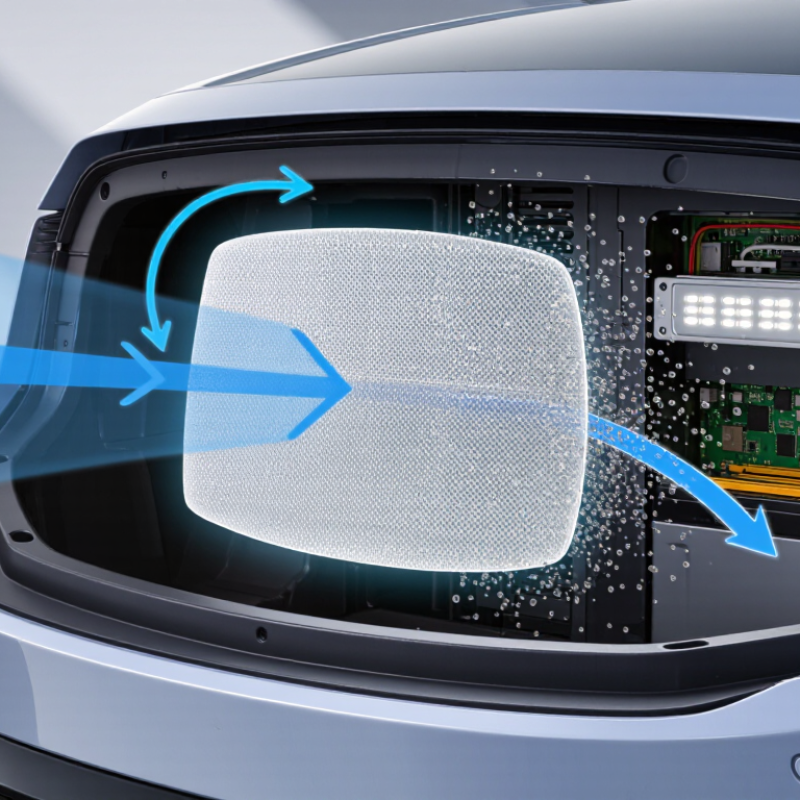
The membrane usually contains a microporous material, often expanded polytetrafluoroethylene, or ePTFE. Its pores can be smaller than liquid droplets, while still allowing gases to pass. This is the basic principle. A pressure change inside a lamp housing, for example, pushes warm air outward. After cooling, the membrane helps reduce vacuum formation. Without suitable venting, seals may deform or moisture may collect behind a lens.
Dr. Robert W. Gore, whose work established ePTFE technology, described its value through a simple engineering idea: “The material has to let air pass while blocking water.” That sentence is brief, but it captures the design challenge clearly. In practice, performance depends on pore structure, adhesive quality, surface tension, airflow resistance, and installation position.
The explanation is not flawless.
A vent membrane is not an unlimited shield. Severe contamination, incorrect bonding, physical abrasion, or blocked airflow can reduce its effectiveness. Engineers must therefore test the complete enclosure, not only the membrane material. This article examines what an Automotive Vent Membrane is, how it works, where it is used, and why careful specification matters in modern vehicle design.
What Is an Automotive Vent Membrane?
An automotive vent membrane is a thin, porous layer fitted over a vent opening in a vehicle component. It allows air and certain gases to move through while helping resist liquid water, dust, and other contaminants. Many designs use expanded polymer materials with tiny pores. Those pores are small enough to block water under specified conditions, yet large enough for air exchange.
You may find these membranes on lamp housings, sensors, and electronic enclosures. Temperature changes can make trapped air expand or contract. Without pressure equalization, seals may experience extra stress, and moisture can become harder to manage. The membrane helps balance pressure while limiting exposure to the elements. It does not make an enclosure completely waterproof; performance depends on the membrane, its installation, and the surrounding seal. That distinction is easy to overlook.
Tips: Keep the vent area clear of mud, wax, and paint. Check for tears or loose edges during inspection. A blocked membrane may reduce airflow, while damage can let water enter. Small details matter.
Key Materials and Performance Characteristics
An automotive vent membrane is a thin, breathable barrier fitted over an opening in a vehicle component. Common materials include expanded polytetrafluoroethylene and specialized polyurethane films. Their tiny pores allow air and pressure to pass while resisting liquid water and dust. The membrane may be bonded to a plastic housing or supported by a protective layer. Small details matter: a rough edge or uneven adhesive bead can create a leak path.
Material choice depends on the part’s location and operating conditions. Under a lamp or sensor housing, the membrane must handle temperature swings, vibration, and repeated pressure changes. In a battery enclosure, chemical exposure and long-term heat may also matter. Hydrophobic surfaces help repel water, but contamination can reduce performance. They are not magic.
Engineers assess airflow, water-entry resistance, dust protection, and durability together. A membrane with very tight pores may block contaminants well but restrict airflow. That can slow pressure equalization and strain seals during rapid temperature changes. Testing should reflect real assembly conditions, including clamping force and adhesive coverage. Lab results alone can miss installation flaws. Even careful designs can show variation between parts, so inspection and field feedback remain important.
Common Applications and Selection Considerations
Automotive vent membranes appear in headlamp housings, battery enclosures, control units, and cabin sensors. They allow air and water vapor to pass while helping block liquid water, dust, and road splash. As temperatures change, trapped air expands or contracts. A membrane vent helps equalize pressure, reducing stress on seals and the risk of moisture being drawn inside. Small part. Important job.
Applications vary. A headlamp vent must manage condensation and repeated heating; an electric-vehicle battery enclosure may need greater attention to splash exposure, temperature, and pressure changes.
The International Energy Agency’s Global EV Outlook 2024 reports nearly 14 million electric cars were sold in 2023, about 18% of global car sales.
That growth makes robust enclosure design increasingly relevant, though sales figures alone do not determine a vent’s specifications. Selection should consider airflow, water-entry resistance, membrane area, mounting position, chemical exposure, and expected service conditions. Test the complete enclosure, not just the membrane material. A detail that is easy to overlook.
Tips: Match the vent to the enclosure’s pressure-equalization needs and exposure profile. Check performance after assembly, including adhesive bonds and housing geometry. Avoid choosing by a single rating; real-world results can differ, and that deserves a second look.