2026 Top Battery Spot Welder Types Buying Guide

Battery assembly is moving from specialized factories into workshops, laboratories, repair centers, and small production lines. The International Energy Agency’s Global EV Outlook 2025 reports that electric car sales exceeded 17 million worldwide in 2024. It also estimates battery demand reached approximately 1 TWh. That scale increases interest in reliable, repeatable joining equipment.

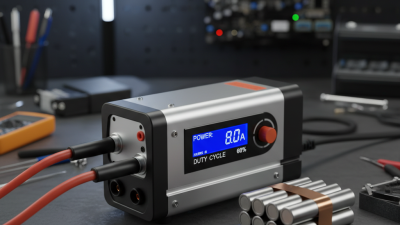
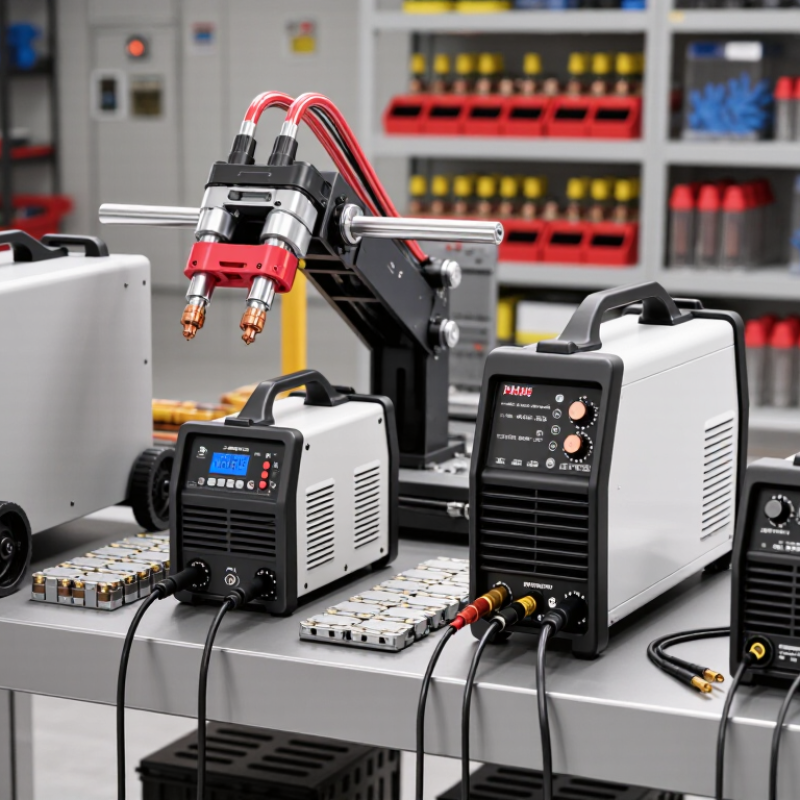
A battery spot welder connects nickel strips to cell terminals through controlled electrical pulses. Unlike soldering, it can limit heat transfer into sensitive cells when properly adjusted. The right machine depends on cell format, strip thickness, production volume, and operator skill. Common choices include transformer welders, capacitor-discharge models, inverter welders, and portable pulse welders. Each type has trade-offs involving current stability, duty cycle, electrode pressure, cooling, and maintenance.

Small details matter.

BloombergNEF’s 2024 Battery Price Survey reported an average lithium-ion pack price of 115 dollars per kWh, a 20% annual decline. Lower costs do not remove safety concerns. Poor weld timing, weak clamping, or excessive current can damage terminals and create unreliable connections. A clean weld is not automatically a safe weld. Buyers should review pulse control, welding energy, electrode design, insulation, emergency controls, and documented testing procedures. Compatibility with relevant battery-pack standards, including IEC 62133-2 or UL 1973 where applicable, also requires professional verification.

This 2026 buying guide compares battery spot welder types through practical specifications and real-use considerations. It also recognizes an uncomfortable point: advertised current ratings are not always directly comparable. Actual results depend on cells, nickel material, settings, and operator technique.
2026 Top Battery Spot Welder Types Buying Guide

Battery Spot Welding Basics: 1–20 ms Pulses for 0.05–0.3 mm Nickel

2026 Top Battery Spot Welder Types Buying Guide

Battery spot welding joins nickel strip to cell terminals through controlled heat and pressure. For 0.05–0.3 mm nickel, a 1–20 ms pulse is a practical starting range. Thin strip often needs shorter pulses, while thicker material may require longer timing or multiple pulses. The exact setting depends on current, electrode pressure, surface cleanliness, and cell construction.

The International Energy Agency’s Global EV Outlook 2024 reported that battery demand for electric vehicles exceeded 750 GWh in 2023. This scale increases the need for repeatable joining processes, even in small workshops.

Technical guidance from the American Welding Society emphasizes controlled energy and consistent electrode contact. In practice, a pulse that sounds suitable can still produce a weak weld. It happens.

A reliable setup uses sharp, clean copper electrodes and firm, even pressure. Start near the lower end of the range, then inspect the weld using a controlled peel test. A good joint should leave a visible mark without tearing excessive nickel.

Excessive sparks, deep electrode dents, or dark discoloration suggest too much energy. The C-rate, cell casing condition, and strip alloy also matter.

Some operators focus only on pulse duration, which is an avoidable mistake. Current stability matters just as much. Record each setting, because a 2 ms change can alter results on thin nickel. Testing remains necessary; no buying chart replaces it.

AC, Capacitor-Discharge, or Inverter: Compare 1–20 kA Output

Battery demand is reshaping spot-welding requirements.

The IEA’s Global EV Outlook 2025 reports that electric-car sales exceeded 17 million in 2024, while battery demand passed 950 GWh. Higher production volumes expose weak weld consistency quickly. Yet kA alone misleads. Measure the pulse.

AC welders suit stable, repetitive work on conventional nickel or steel tabs. Their 50 or 60 Hz current is familiar, affordable, and easy to service. However, AC delivers less precise heat control at very short weld times.

Capacitor-discharge systems release stored energy in milliseconds. They can reach roughly 1–20 kA, limit heat spread, and reduce marking on thin cells. Recharge time and capacitor aging need attention. That detail is often ignored.

Inverter welders use medium-frequency control for smoother current and faster feedback. They generally offer better repeatability across changing resistance, especially with copper, aluminum, or layered busbars. Their electronics cost more, and poor cooling can reduce duty-cycle performance. A 10 kA rating may mean little if it lasts only one pulse. Review pulse duration, duty cycle, electrode force, and waveform data under ISO 18595 conditions. The resistance-welding literature repeatedly links electrode pressure and surface condition with nugget stability.

In practice, a 4 kA inverter can outperform a 12 kA AC unit when alignment is poor. A common buying mistake is trusting the nameplate. Test representative tabs, record resistance, and inspect cross-sections before committing.

Match Welding Force and Current to 18650, 21700, and Prismatic Cells

2026 Top Battery Spot Welder Types Buying Guide

Choosing a battery spot welder starts with the cell format, not the machine’s headline current. A 18650 cell usually needs controlled pulses through thin nickel strip. Its smaller terminal leaves little room for poor alignment. A 21700 cell offers a wider contact area, but it can still suffer from weak welds. Prismatic cells often use larger tabs, thicker connectors, and more demanding heat control.

Capacitive discharge welders deliver short, concentrated pulses. They suit repeatable cylindrical-cell assembly when pulse timing is adjustable. Transformer-based welders can provide strong output, but their control may feel less refined. Match welding force with current. Too little force increases contact resistance and creates sparks. Excessive force can flatten the strip and damage the terminal surface. The correct pressure creates a clean, firm contact before the pulse begins.

I check sample welds on identical scrap strips before production. A successful joint should hold firmly without tearing away excessive cell material. Current alone proves very little. Strip thickness, nickel purity, electrode shape, and pulse duration all change the result. For 18650 cells, moderate force and short pulses often work well. 21700 cells may need broader electrode coverage. Prismatic tabs require careful alignment and evenly distributed pressure. Results can vary between batches. That is easy to overlook. A weld monitor, visual inspection, and pull testing provide more reliable evidence than sound or appearance alone.

Assess Automation: Up to 300 Welds per Minute with Closed-Loop Control

High-throughput battery assembly increasingly depends on automation, but speed alone does not prove quality. Some advanced systems advertise up to 300 welds per minute. That figure is a ceiling, not a daily promise. Cell format, tab material, electrode pressure, and indexing time can reduce real output. Closed-loop control makes the difference visible.

It continuously checks welding current, voltage, force, displacement, and pulse timing. If resistance changes, the controller can adjust energy before defects spread across a batch. Operators should review traceable weld curves, alarm history, and reject patterns. These records support process validation and maintenance decisions. Look for stable electrode force. Small details matter.

During equipment trials, request samples at normal speed, not only demonstration speed. Inspect nugget consistency, spatter, indentation, and heat marks under magnification. A practical acceptance test should include material variation and planned electrode wear. Otherwise, impressive cycle time may hide unstable quality. I would also question recovery time after alarms. Fast welding means little when resets require manual intervention. One overlooked issue is operator training. Closed-loop systems still need correct setup. Poor calibration can produce confident-looking data. That limitation deserves honest review before purchase.

Verify Safety with IEC 62133-2, UL 1973, and Weld-Quality Monitoring

2026 Top Battery Spot Welder Types Buying Guide

A battery spot welder should be judged by safety evidence, not welding speed alone. IEC 62133-2 helps verify safety requirements for portable lithium battery cells and packs. UL 1973 addresses battery systems used in stationary and auxiliary applications. These standards do not automatically certify every welder. Confirm the battery design, test reports, certification scope, and production records.

Weld-quality monitoring is equally important. A reliable machine should record welding current, pulse time, electrode pressure, and resistance changes. Some systems also detect weak contact before a poor weld becomes hidden inside a pack. Inspect electrode tips regularly. Their shape affects heat distribution. Perform peel or pull tests on sample joints, then compare results with your approved process limits. A bright weld is not always a strong weld.

Tips: Ask for traceable test data, calibration dates, alarm records, and maintenance instructions. Use guarded controls and an emergency stop. Keep flammable materials away from the work area. Never rely on appearance alone. In practice, one missed inspection can weaken an entire batch. I would also review the process after unusual noise, sparks, or electrode wear. Standards provide a foundation, but disciplined monitoring makes that foundation useful.