What is an Air Cooled Chiller and How Does it Work?
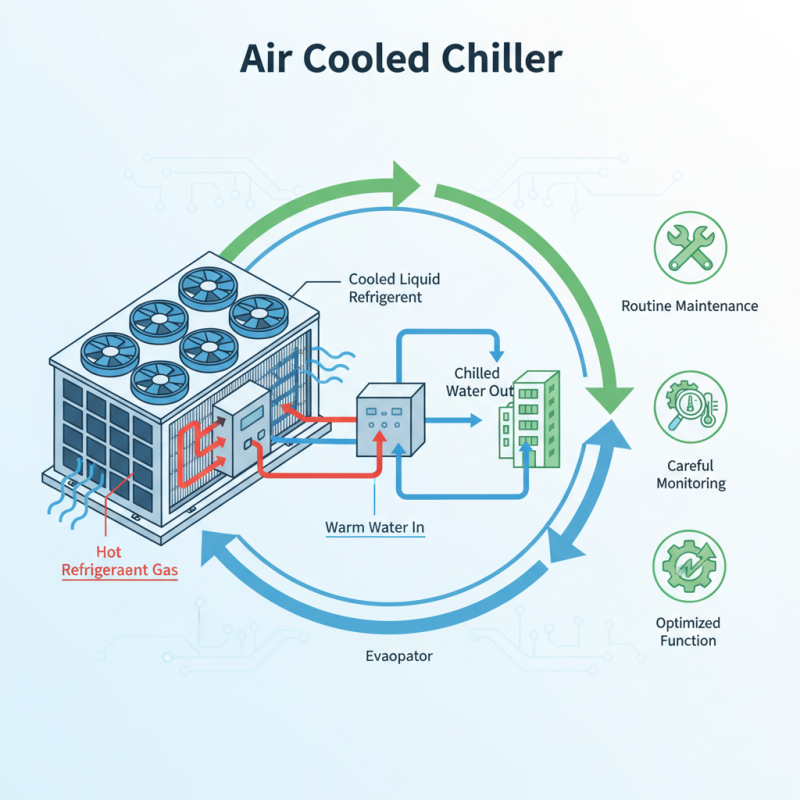
An air cooled chiller is a vital component in many cooling systems. It typically uses ambient air to dissipate heat from the refrigerant. This process allows chilled water to circulate through buildings or industrial processes, maintaining optimal temperatures.
Understanding how an air cooled chiller operates can seem complicated. The principles behind its function are not always apparent. However, when you break it down, it becomes clearer. These chillers often rely on fans, coils, and a compressor. Each part plays a role in ensuring efficient cooling.
In commercial settings, the importance of an air cooled chiller is undeniable. Yet, even the best systems can face challenges. Routine maintenance and careful monitoring are essential. Ignoring these can lead to failures or inefficiencies. Observing how your chiller performs over time is crucial for optimizing its function.
Definition of an Air Cooled Chiller and Its Components
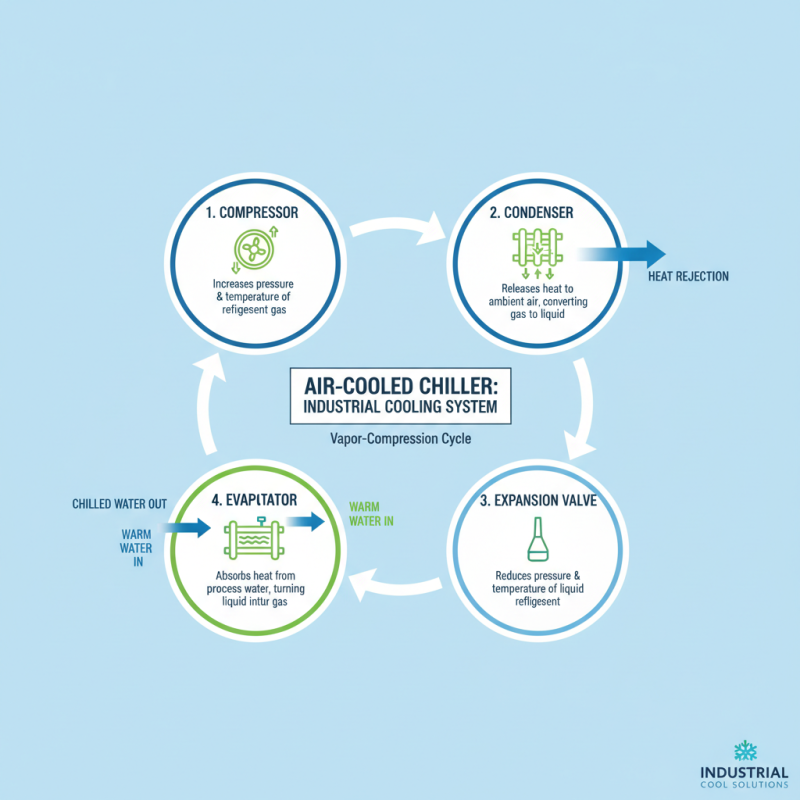
An air cooled chiller is a crucial system for industrial cooling applications. It operates by removing heat from a liquid via a vapor-compression or absorption refrigeration cycle. The main components include the compressor, condenser, expansion valve, and evaporator. Each part plays a unique role in the cooling process.
The compressor pumps refrigerant vapor. It increases pressure and temperature. As it moves through the system, the refrigerant absorbs heat. Next, it enters the air-cooled condenser. This component releases heat to the ambient air. Recent industry reports indicate that efficient air cooled chillers can reduce energy consumption by up to 40%. Yet, many facilities still underutilize this potential.
Despite the advantages, air-cooled chillers can face challenges. Limitations arise in high ambient temperatures. Performance may drop, necessitating alternative cooling methods. Regular maintenance is vital for optimal functioning. Operators often overlook this, which can lead to inefficiencies. Identifying these issues early can save energy and cost.
Principle of Operation: How an Air Cooled Chiller Works
An air cooled chiller is a vital part of many cooling systems. It relies on the surrounding air to dissipate heat. The operational principle is relatively straightforward but requires careful attention to detail.
When the system operates, refrigerant absorbs heat from the building. This refrigerant then circulates to the evaporator coils. Here, the heat exchange occurs. The air surrounding these coils helps to cool the refrigerant. As a result, the refrigerant's temperature drops, allowing it to return to the system efficiently.
However, challenges can arise. Not enough airflow can hinder performance significantly. Dusty or clogged filters might restrict air movement, reducing cooling efficiency. Regular maintenance is essential but can often be overlooked, leading to inefficiencies. Some operators might feel confident in skipping service checks, resulting in bigger problems later on. Attention to these details makes all the difference.
Air Cooled Chiller Performance Data
This bar chart illustrates the performance metrics of an air cooled chiller. The cooling capacity, power consumption, and energy efficiency ratio are essential indicators to evaluate the chiller's efficiency and operational effectiveness.
Advantages of Using Air Cooled Chillers in HVAC Systems
Air cooled chillers are essential in HVAC systems. They use ambient air to cool refrigerant. This method is popular because it requires less water compared to water-cooled systems. Moreover, they are often easier to install. A space without cooling towers can benefit greatly from air cooled chillers.
One significant advantage is energy efficiency. Many models are designed to use less electricity. This feature translates to lower energy bills. Additionally, they are less prone to corrosion since they use air. There is often less maintenance involved. However, they may struggle in extremely hot climates. Efficiency can drop when temperatures rise above certain levels.
Another benefit is their compact size. Air cooled chillers can fit in tighter spaces. This flexibility is appealing for retrofitting older buildings. Yet, noise can be an issue. They are generally noisier than water-cooled units. Potential noise drawbacks should be evaluated during installation. Balancing these advantages and disadvantages is crucial for making the right choice in HVAC systems.
Common Applications of Air Cooled Chillers in Various Industries
Air cooled chillers are versatile systems used across various sectors. They provide reliable cooling in industrial applications, commercial buildings, and more. Their main function is to remove heat from a liquid through vapor-compression or absorption refrigeration cycles. This makes them vital in manufacturing processes and HVAC systems.
In the food and beverage industry, air cooled chillers ensure that perishable products maintain the right temperature. They are crucial in large-scale kitchens and breweries. These systems help enhance product quality and extend shelf life.
In data centers, they manage heat produced by servers, preventing overheating. This improves operational efficiency and protects sensitive equipment.
Tips:
- Regular maintenance is essential.
- Check refrigerant levels periodically.
- Keep the condenser coils clean to ensure efficiency.
- Monitor the ambient temperature as it affects the chiller’s performance.
Air cooled chillers may not perform efficiently in high ambient temperatures. Operators should consider this when placing the units. Sometimes, they might struggle in locations with heavy dust or debris. Proper placement can enhance performance and longevity.
Maintenance and Efficiency Considerations for Air Cooled Chillers
Air cooled chillers are vital for various cooling applications. To ensure optimal performance, regular maintenance is crucial. Neglecting this aspect can lead to inefficiency. Dirt buildup on coils can hinder heat exchange. This decreases cooling capacity and increases energy consumption. Cleaning these coils should be a scheduled task.
Inspecting fans and motors is another key point. Over time, these components can wear out. A worn fan can create extra noise and vibration. This may indicate a need for replacement. Lubrication can extend the life of moving parts, but be sure to follow proper guidelines to avoid over-lubrication.
Monitoring efficiency levels is equally important. Keeping an eye on refrigerant levels ensures the system runs smoothly. Low refrigerant can lead to compressor damage. Regularly checking for leaks helps maintain overall system health. Addressing minor issues promptly prevents larger problems down the line.