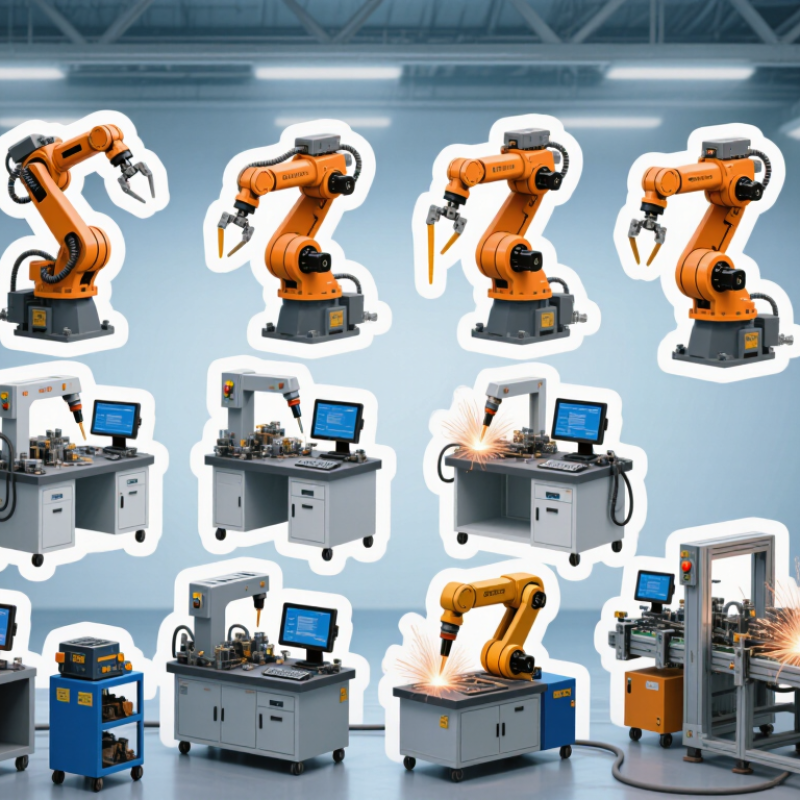
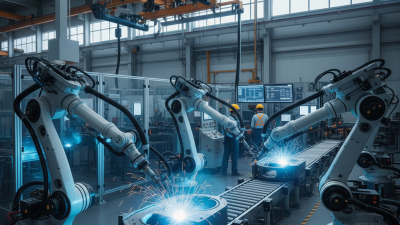
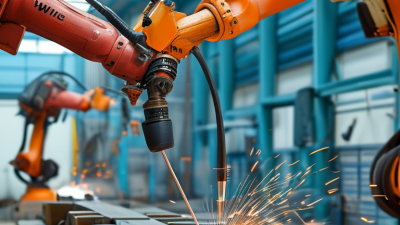
| Industrial robotic arc-welding cell |
Typical productive arc-on time: approximately 35–65% of a scheduled production shift, depending on loading, changeovers, and part flow. |
Commonly configured for MIG/MAG and, with suitable equipment, TIG or other arc processes. Best with repeatable steel, stainless-steel, or aluminum components and accessible joints. |
Usually uses a guarded enclosure with interlocked access, safe robot stopping, fume extraction, and a documented risk assessment. Safeguards depend on the complete cell layout. |
Approximately USD 8–25 per productive welding hour. Excludes direct labor, depreciation, facilities, and workpiece material. |
Repeated parts, stable production volumes, and applications where consistent weld paths are important. |
Needs reliable fixturing and programming; frequent part variation or short runs can reduce utilization. |
| Collaborative welding station |
Typical productive arc-on time: approximately 25–50% of a scheduled shift. Operator-assisted loading and flexible setup can suit frequent changeovers. |
Often used for accessible MIG/MAG welds on small to medium parts. Reach, payload, torch package, and allowable welding parameters vary by configuration. |
Collaborative operation is not automatically safe. Risk assessment may require reduced speed, separation monitoring, guarding, or other protective measures; welding hazards still need control. |
Approximately USD 10–30 per productive welding hour. Excludes direct labor, depreciation, facilities, and workpiece material. |
Small and medium manufacturers seeking flexible automation for short or mixed production runs. |
Lower reach or payload than many industrial robot cells; operator presence does not remove arc, fume, burn, or pinch hazards. |
| Robot mounted on a linear track |
Typical productive arc-on time: approximately 35–65% of a scheduled shift. The track can extend the robot’s working envelope along long assemblies. |
Commonly used for arc welding of large frames, beams, vehicle structures, and long seams. Requires coordinated robot, track, fixture, and workpiece programming. |
Typically protected by perimeter guarding or a designed safety-rated monitored area, with interlocks and safe stopping appropriate to the complete installation. |
Approximately USD 12–35 per productive welding hour. Excludes direct labor, depreciation, facilities, and workpiece material. |
Long workpieces or multiple weld locations beyond the reach of a stationary robot. |
More floor space and integration effort; track alignment and maintenance affect accuracy and uptime. |
| Gantry or portal welding system |
Typical productive arc-on time: approximately 40–70% of a scheduled shift. Long travel axes can support repeatable welding across large work areas. |
Can be configured for arc processes and, in suitable designs, submerged arc welding. Common applications include large plates, tanks, structural sections, and heavy assemblies. |
May use guarded or restricted-access work zones, safety-rated travel limits, emergency stops, and protective measures for fumes, heat, and moving machinery. |
Approximately USD 10–30 per productive welding hour. Excludes direct labor, depreciation, facilities, and workpiece material. |
Large, heavy, or geometrically simple workpieces with long, repeatable seams. |
Less flexible for complex, frequently changing part geometries; installation and floor-space needs can be substantial. |
| Multi-robot welding line |
Typical productive arc-on time: approximately 45–75% of a scheduled shift when stations, fixtures, and material flow are well balanced. |
Often combines multiple arc-welding robots with indexing fixtures or transfer equipment. Suited to high-volume, repeatable assemblies with several weld locations. |
Requires coordinated cell guarding, access interlocks, safety-rated operating modes, and a risk assessment covering robots, transfer equipment, and work zones. |
Approximately USD 15–45 per productive welding hour. Excludes direct labor, depreciation, facilities, and workpiece material. |
High-volume production where cycle time and repeatability justify an integrated line. |
Higher integration and commissioning complexity; a line-wide fault or changeover can affect multiple stations. |
| Mechanized submerged arc welding system |
Typical productive arc-on time: approximately 50–80% of a scheduled shift for prepared, long seams and steady production flow. |
Best suited to long, accessible seams in thicker carbon or low-alloy steel. Commonly uses wire electrode and granular flux; configuration determines whether single- or multiple-wire welding is possible. |
Needs controls for electrical and thermal hazards, flux handling, moving equipment, and fume exposure. Enclosures or barriers may be needed based on the installation and risk assessment. |
Approximately USD 15–50 per productive welding hour. Excludes direct labor, depreciation, facilities, and workpiece material. |
Heavy fabrication, pressure-vessel components, and long seams where high deposition rates are useful. |
Generally unsuitable for short, intricate, or overhead welds; flux management and joint preparation are important. |
| Automated orbital pipe-welding system |
Typical productive arc-on time: approximately 25–55% of a scheduled shift, depending on fit-up, purge requirements, setup, and inspection needs. |
Designed for circumferential pipe or tube joints. Process options can include TIG and other suitable methods; material, diameter, wall thickness, and access determine the configuration. |
Requires controls for arc radiation, hot surfaces, electrical hazards, shielding or purge gases, and confined or restricted work areas where applicable. |
Approximately USD 15–60 per productive welding hour. Excludes direct labor, depreciation, facilities, and workpiece material. |
Repeatable pipe and tube joints in sectors requiring controlled circumferential welds. |
Fit-up, joint preparation, and access are critical; specialized heads and procedures may limit flexibility across pipe sizes. |
| Mechanized torch with positioner |
Typical productive arc-on time: approximately 35–65% of a scheduled shift when loading, rotation, and weld sequencing are well organized. |
Uses a powered torch and rotating or tilting positioner for repeatable circumferential or positional welds. Commonly configured for suitable MIG/MAG or TIG applications. |
Needs guarding or other protective measures for rotating fixtures, pinch points, arc radiation, hot workpieces, and fume exposure. |
Approximately USD 8–25 per productive welding hour. Excludes direct labor, depreciation, facilities, and workpiece material. |
Round parts, repeatable joints, and manufacturers seeking a simpler step toward mechanized welding. |
Less adaptable than a robot for complex paths; an operator may still need to load parts and manage each cycle. |
| Laser-hybrid welding cell |
Typical productive arc-on time: approximately 30–60% of a scheduled shift, subject to joint preparation, material handling, and process qualification. |
Combines a laser source with an arc process. Can be applied to selected steel or other compatible materials; joint fit-up, thickness, and reflective properties require careful evaluation. |
Requires laser-specific protective design, controlled access, suitable enclosures, interlocks, and a risk assessment, in addition to controls for arc welding and fumes. |
Approximately USD 25–90 per productive welding hour. Excludes direct labor, depreciation, facilities, and workpiece material. |
Qualified applications where high travel speed or a particular penetration profile offers a production advantage. |
Higher process and safety-system complexity; joint tolerances, material selection, and service capability need careful review. |
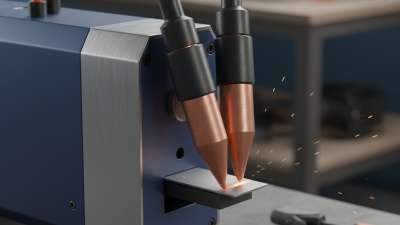
| Automated resistance spot-welding system |
Typical productive cycle utilization: approximately 20–50% of a scheduled shift. This is a cycle-based process and does not use arc-on time. |
Commonly joins overlapping conductive sheet materials using electrodes and controlled current, force, and time. Part access and sheet stack-up are key factors. |
Requires protection from moving electrodes, pinch points, electrical hazards, hot parts, and unexpected machine motion; guarding and interlocks depend on cell design. |
Approximately USD 5–25 per productive operating hour. Excludes direct labor, depreciation, facilities, and workpiece material. |
High-volume sheet-metal assemblies with accessible, repeatable spot locations. |
Joint geometry and material stack-up constrain use; electrode wear, force control, and weld quality monitoring need attention. |
| Comparison notes: Performance ranges are broad planning estimates, not guaranteed equipment ratings; actual results depend on part mix, shift pattern, loading, fixturing, process parameters, inspection, and changeover time. Operating-cost ranges are indicative USD estimates per productive hour and can vary substantially with local electricity prices, consumables, maintenance practices, and duty cycle. They exclude direct labor, depreciation, facilities, and workpiece material. Safety provisions must be selected through a site-specific risk assessment and checked against applicable local regulations and standards. No system is automatically compliant solely because of its system type. |