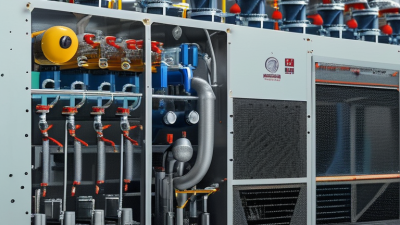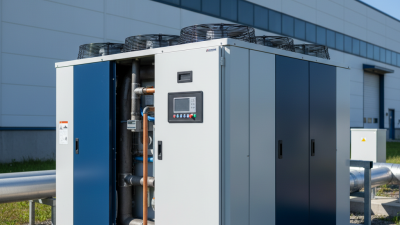
An air chiller can look straightforward on a specification sheet, yet the right choice depends on the work it must do. A food plant, data center, and plastics workshop may need very different cooling performance. Buyers should compare capacity, operating temperatures, energy use, controls, and installation requirements against actual site conditions. Details matter.
This guide introduces ten air chiller manufacturers for global buyers and offers a practical starting point for supplier research. It considers product range, customization, documented technical support, and the availability of service and spare parts. Those factors can matter when a unit runs through hot afternoons or must hold a steady process temperature. A polished brochure can still leave questions unanswered. Ask about performance at your expected ambient temperature, maintenance access, and how quoted capacity was measured. Not always obvious.
Manufacturer choice also depends on location. A supplier with suitable equipment may not have nearby technicians or a clear parts route in every market. Request current datasheets, warranty terms, references for comparable applications, and written confirmation of key operating limits. Verify details directly before making a purchase; product lines and regional support can change. No ranking can replace an engineering review of load, airflow, electrical supply, and installation space. Use this shortlist to guide that conversation, not to end it.
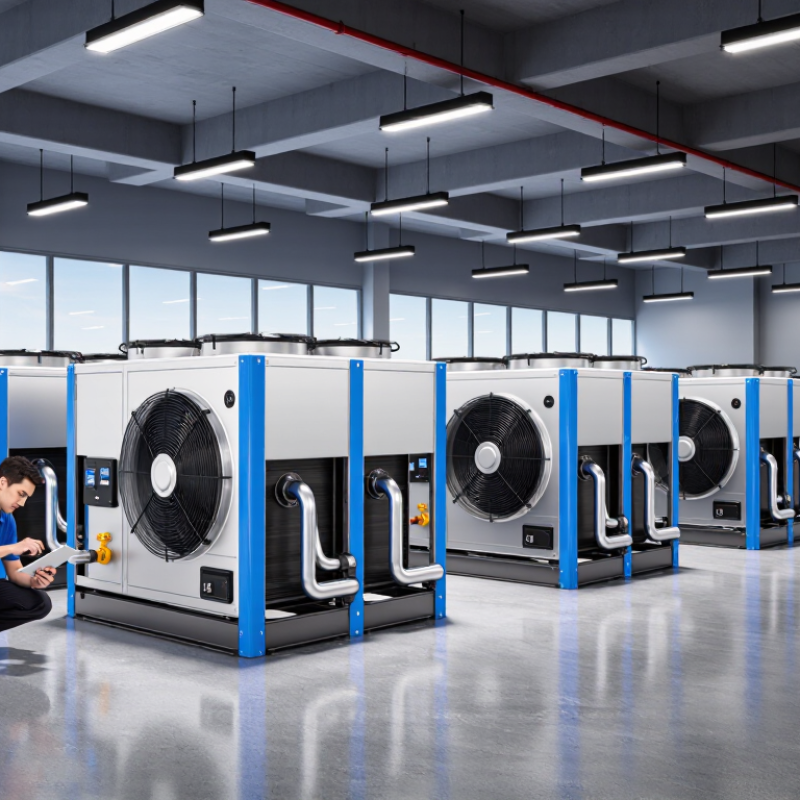
An air chiller removes heat from water or another process fluid, then sends the cooled fluid through pipes to equipment or building coils. Most units use vapor compression: refrigerant absorbs heat in the evaporator, the compressor raises its pressure, and the condenser releases heat outside. An expansion valve lowers refrigerant pressure, and the cycle repeats. The details matter.
Chillers are classified in more than one way. Air-cooled models reject heat directly to outdoor air, while water-cooled models transfer it to a cooling tower. Vapor-compression and absorption systems describe different cooling cycles; scroll, screw, and centrifugal units describe compressor designs. These categories can overlap, which makes product comparisons less simple than brochures suggest.
Common uses include building HVAC, food processing, plastics production, and data-center cooling. The IEA’s 2018 report, The Future of Cooling, projected that global energy demand for space cooling could more than triple by 2050 under its stated scenario. That figure covers space cooling broadly, not chillers alone. Still, it highlights why buyers should compare part-load efficiency, local operating conditions, and maintenance access—not just rated capacity. A chiller that looks efficient on paper may perform differently in a dusty plant room or a hot climate.
Choosing an air chiller manufacturer requires more than comparing purchase prices. Start with verified operating data, including cooling capacity, ambient temperature, airflow, and power consumption. Ask for test conditions and complete performance curves. A reliable supplier explains how the unit performs at 35°C or higher. That detail matters in hot warehouses and manufacturing plants. Request drawings, wiring diagrams, maintenance schedules, and spare-parts lists before signing a contract. Clear documentation often reveals technical maturity.
Inspect the factory, physically or through a trusted third party. Check assembly areas, pressure-testing equipment, control-panel quality, and finished-unit storage. Ask how technicians record refrigerant charging and leak tests. Small details matter. Review quality certifications, export experience, and customer references from similar climates. Do not accept certificates without checking their scope and validity. A polished brochure can still hide weak after-sales support. I have seen low bids become expensive after delayed parts and unclear warranty terms.
Evaluate the full ownership cost, not only the invoice. Compare energy efficiency, compressor access, water-free operation, noise levels, installation requirements, and expected service life. Ask who provides commissioning support and how quickly remote troubleshooting begins. Define response times in writing. Also examine local voltage compatibility and control-system integration. Forecasts are never perfect. Your load calculation may be wrong, especially when production changes seasonally. Therefore, request a selection review based on real operating data, not optimistic assumptions. A pilot unit or witnessed factory test can expose problems before a large shipment.
Top 10 Air Chiller Manufacturers for Global Buyers
Regional Markets and Capabilities of Leading Chiller Suppliers
Choosing among the top air chiller manufacturers requires more than comparing cooling capacity. Regional climate, electricity quality, service access, and import conditions often decide long-term performance. Suppliers serving Southeast Asia usually emphasize corrosion protection, high ambient operation, and compact footprints. In the Gulf region, equipment must handle dust, intense solar heat, and outdoor temperatures above 45°C.
European suppliers often focus on low-noise systems, seasonal efficiency, and refrigerant transition planning. These capabilities suit hospitals, offices, and data facilities with strict energy targets. In North America, buyers may value modular packages, controls integration, and quick replacement of standard components. Latin American projects can require flexible voltage options and strong local distributor networks. Service matters greatly.
In Africa and remote industrial areas, simple maintenance can outweigh advanced software. A chiller with accessible filters, clear alarms, and common spare parts may deliver better results. Leading suppliers increasingly provide remote monitoring, variable-speed compressors, and factory performance testing. However, published efficiency figures may reflect ideal laboratory conditions. Field results can differ because of fouled coils, unstable power, or poor water treatment.
A reliable evaluation should include reference projects in the target climate, technician response times, warranty terms, and documented testing procedures. Ask for operating data, not only brochures. My comparison is not flawless; regional performance changes with installation quality and maintenance discipline. The cheapest quotation can become expensive when one compressor failure stops an entire production line.
This is a regional market overview, not a ranked list of named companies. Profiles summarize established supplier capabilities commonly found in each market; actual configurations, performance, and availability vary by manufacturer and model.
| No. | Supplier Profile | Primary Markets | Common Air-Cooled Chiller Capabilities | Typical Applications | Buyer Considerations |
|---|---|---|---|---|---|
| 1 | North American commercial and industrial suppliers | United States, Canada, and export markets | Packaged scroll and screw chillers; modular options; controls and heat-recovery configurations are available across the market. | Offices, hospitals, education facilities, manufacturing, and data-center cooling. | Check project-specific efficiency ratings, local code compliance, service coverage, and low-ambient operating limits. |
| 2 | Western European HVAC manufacturers | Western Europe and international markets | Scroll and screw platforms, modular systems, heat-pump variants, and products designed to meet regional efficiency and refrigerant requirements. | Commercial buildings, public facilities, process cooling, and retrofit projects. | Confirm refrigerant requirements, seasonal efficiency data, acoustic limits, and availability of local commissioning support. |
| 3 | East Asian technology-focused suppliers | Japan, South Korea, and export markets | Compact scroll and screw designs, variable-speed options, electronic controls, and packaged systems for building and process use. | Commercial buildings, electronics production, precision manufacturing, and institutional sites. | Compare part-load performance, control-system compatibility, spare-parts access, and service arrangements in the destination country. |
| 4 | Chinese high-volume HVAC suppliers | China, Asia-Pacific, the Middle East, Africa, and other export markets | Broad packaged-chiller portfolios that commonly include scroll and screw units, modular configurations, and multiple control options. | Commercial developments, factories, hotels, and general process-cooling installations. | Verify independent performance certification, factory quality documentation, export support, and the precise scope of the warranty. |
| 5 | Indian packaged-chiller suppliers | India and nearby South Asian markets | Air-cooled scroll and screw systems, packaged designs, and configurations selected for local ambient conditions and industrial requirements. | Pharmaceutical production, food processing, commercial buildings, and general manufacturing. | Check rated performance at the project’s design ambient temperature, electrical requirements, and access to maintenance technicians. |
| 6 | Middle Eastern regional suppliers and integrators | Gulf states and neighboring markets | High-ambient selections, packaged screw and scroll systems, and options such as coil protection and remote monitoring. | Hotels, hospitals, commercial complexes, industrial facilities, and infrastructure projects. | Request capacity data at the actual peak outdoor temperature; assess dust protection, corrosion exposure, and heat-rejection clearances. |
| 7 | Southeast Asian HVAC suppliers | Southeast Asia and tropical export markets | Packaged scroll and screw chillers with configurations suited to hot, humid conditions; corrosion-resistant options may be available. | Hotels, shopping centers, food and beverage plants, and light industrial sites. | Review humidity-related operating conditions, coil materials, condensate management, and regional parts availability. |
| 8 | Turkish and Eastern European manufacturers | Türkiye, Eastern Europe, Central Asia, and nearby export markets | Packaged air-cooled scroll and screw systems, with product ranges serving commercial and industrial cooling applications. | Commercial buildings, manufacturing plants, warehouses, and process-cooling projects. | Confirm applicable safety and performance standards, documentation language, delivery terms, and commissioning responsibilities. |
| 9 | Oceania-focused suppliers | Australia, New Zealand, and Pacific markets | Commercial and industrial air-cooled packages, including scroll and screw configurations and options for demanding outdoor environments. | Commercial buildings, healthcare, education, food processing, and industrial facilities. | Check local regulatory compliance, coastal corrosion protection, noise limits, and service coverage outside major cities. |
| 10 | Global OEM and regional-assembly suppliers | Multiple continents through local subsidiaries, distributors, or assembly partners | Product portfolios may span modular scroll, screw, and specialized process-chiller configurations, with locally adapted controls and accessories. | Multi-site building portfolios, industrial projects, data centers, and international construction programs. | Identify the entity responsible for the warranty, confirm local engineering support, and compare lifecycle service costs across regions. |
The ten profiles cover distinct air chiller capabilities for global buyers. One specializes in compact scroll chillers for retail buildings. Another focuses on high-efficiency screw systems for factories. A third develops modular units for phased construction. The fourth serves hospitals with redundant cooling circuits. The fifth targets data centers requiring stable leaving-water temperatures. The sixth manufactures low-noise equipment for hotels and offices. The seventh emphasizes tropical-climate performance and corrosion protection. The eighth supplies large centrifugal systems for campuses. The ninth builds packaged units for quick replacement projects. The tenth focuses on controls, remote monitoring, and service contracts.
IEA’s The Future of Cooling projects global cooling energy demand could more than triple by 2050. That outlook makes part-load efficiency increasingly important. ASHRAE guidance also stresses equipment selection, water flow, controls, and maintenance as connected factors. A strong manufacturer should publish tested capacity, seasonal efficiency, sound levels, refrigerant data, and operating limits. Sales claims alone are weak evidence.
Field experience reveals practical differences. A chiller may perform well in a laboratory, yet struggle with dusty air, unstable power, or poor water treatment. Published data is not always comparable. Buyers should request factory test procedures, local references, spare-parts availability, and commissioning records. Service response matters. So does documentation. One overlooked detail can increase energy use for years.
Top 10 Air Chiller Manufacturers for Global Buyers
Comparing Products, Certifications, Support, and Delivery Options
Selecting among ten air chiller manufacturers requires more than comparing cooling capacity and purchase prices. Air-cooled models suit sites with limited water access, while water-cooled units can perform efficiently in stable plant conditions. Check leaving-water temperature, ambient derating, part-load efficiency, noise levels, and compressor service access. A unit rated for 500 kW may deliver less capacity in a 40°C warehouse.
Certifications deserve careful verification. Request ISO 9001 records, CE or UL documentation, pressure-vessel compliance, and refrigerant declarations where applicable. Certificates should identify the exact model, not only the factory. Independent performance-test reports add useful confidence. In practice, some datasheets omit altitude corrections or seasonal efficiency figures. That omission should not be ignored.
After-sales support often separates a dependable supplier from a difficult one. Ask whether engineers provide remote commissioning, fault-code guidance, and local spare-parts assistance. Response times should appear in the contract. Delivery terms also need precision, including lead time, export packing, Incoterms, port handling, and warranty start dates. A realistic supplier shares production photos, inspection records, and packing dimensions before shipment. One weakness remains common: buyers sometimes choose the lowest quotation without checking lifecycle costs, installation labor, or replacement compressor availability. That decision can become expensive.
Comparing products, certifications, support, and delivery options through refrigerant sustainability data
Refrigerant selection is an important product-screening factor for international air chiller buyers. The chart compares 100-year global warming potential values reported for commonly used refrigerants. Lower GWP values may support long-term regulatory compliance, sustainability targets, and easier market access. Values are based on IPCC AR4 GWP100 figures.