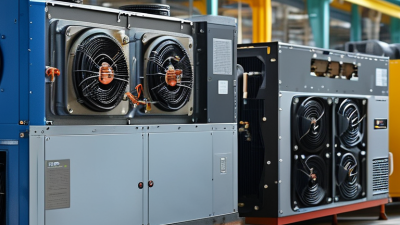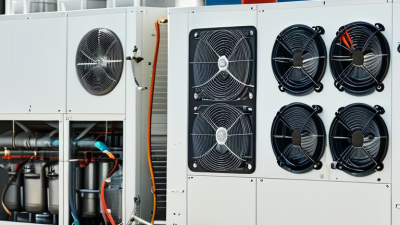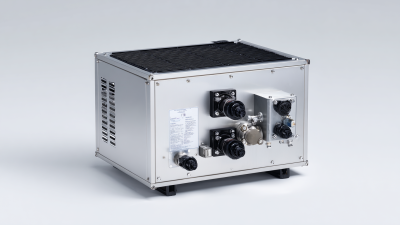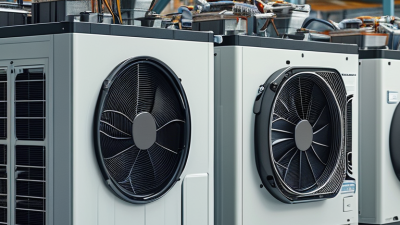
Choosing an air cooled water chiller is not merely a capacity decision. It affects energy bills, maintenance work, noise levels, and daily comfort.
The International Energy Agency reports that space-cooling demand could more than triple worldwide by 2050. This trend makes efficient chiller selection increasingly important. The U.S. Department of Energy also notes that cooling systems can represent a major share of commercial building electricity use. Yet catalog efficiency numbers can mislead. They may reflect ideal conditions, not a dusty rooftop at 35°C.
Experience matters here.
Moncef Krarti, professor of architectural engineering at the University of Colorado Boulder, has emphasized that “energy efficiency is the cheapest energy resource.” His point applies directly to chiller purchasing. A slightly higher initial cost may reduce long-term operating expenses. However, that result depends on proper sizing, airflow, condenser cleaning, water quality, controls, and service access.
This guide, “10 Tips for Choosing an Air Cooled Water Chiller,” examines those practical details. It considers cooling capacity, seasonal efficiency, refrigerant requirements, sound pressure, ambient temperature limits, redundancy, footprint, controls, warranty terms, and lifecycle cost. It also encourages readers to question supplier claims. A unit may look efficient on paper. Its performance can decline when filters clog or coils collect pollen.
Small details matter.
For example, a technician needs safe clearance around the condenser coil. An operator needs clear alarms on the control screen. A facility manager needs realistic part-delivery times. No single specification guarantees success. The best choice matches the building load, climate, operating schedule, and maintenance capability. Some recommendations may require refinement after site testing. That is not failure; it is responsible engineering.
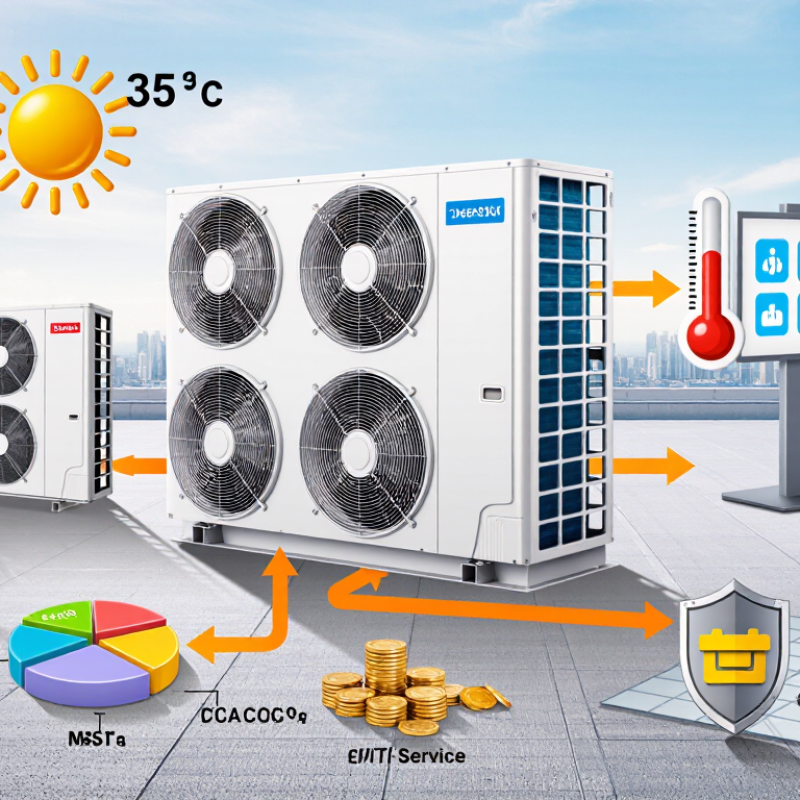
Before selecting an air-cooled water chiller, quantify the actual cooling load. Convert process heat, indoor loads, pump heat, and safety margin into kilowatts. One refrigeration ton equals 3.517 kW, according to AHRI rating conventions. Do not size from floor area alone. A glass room and a shaded warehouse behave differently.
Define entering and leaving water temperatures, flow rate, and acceptable temperature swing. AHRI Standard 550/590-2023 evaluates chillers under standardized conditions, including full-load and part-load performance. Your site may be harsher. Record the summer design dry-bulb temperature, altitude, humidity, and condenser air clearance. A high ambient can reduce capacity and raise compressor power. Check the actual operating map, not only the catalogue rating.
Operating fluid matters. Water, glycol mixtures, and treated water transfer heat differently. Glycol can increase viscosity and reduce capacity, especially in long pipe runs. ASHRAE Handbook guidance supports reviewing flow, fouling, freeze protection, and heat exchanger approach temperatures during design. Leave service space around coils. Dirty fins are not a minor detail. Field commissioning often exposes incorrect flow assumptions, and these errors are easy to miss. A neat spreadsheet can still be wrong. Recheck the load after startup using measured temperatures, flow, and power. That imperfect step improves the next selection.
Choosing an air-cooled water chiller requires more than matching tons to a cooling load. The U.S. Energy Information Administration’s 2018 CBECS data shows cooling uses about 10% of commercial building energy. That makes efficiency a practical operating concern. Size capacity from a verified load calculation, not a rough floor-area estimate. Oversizing can cause short cycling, unstable water temperatures, and wasted electricity. Undersizing may leave a server room or production line overheating on the hottest afternoon.
Tip: Compare full-load and part-load efficiency. Ask for kW/ton or COP at several operating points. AHRI certification helps verify published performance under standard conditions. Seasonal efficiency matters because chillers often run below peak load. A unit rated at 0.60 kW/ton at full load may perform differently at 50% load. Check condenser-air temperature, leaving-water temperature, and fouling assumptions. Small details change the result.
Tip: Calculate annual energy use, not only purchase price. Use local weather data, operating hours, and expected load profiles. The U.S. Department of Energy recommends life-cycle cost analysis for major energy equipment. Include fan power, pump power, controls, maintenance, and standby consumption. A higher-capacity model is not automatically better. In real commissioning work, measured performance sometimes differs from the brochure. Sensors may be poorly calibrated, and airflow may be restricted by nearby walls. Leave room for inspection, but do not confuse extra capacity with efficiency.
| Tip | Selection Dimension | Practical Check | Typical Reference Range | Why It Matters |
|---|---|---|---|---|
| 1 | Match the Required Cooling Capacity | Calculate the design heat load from process equipment, building loads, pumps, lighting, and future expansion. | Common packaged range: 5–500 refrigeration tons (17.6–1,758 kW) | A chiller that is too small cannot maintain setpoint; excessive oversizing can increase cycling and reduce part-load efficiency. |
| 2 | Allow a Sensible Capacity Margin | Add a controlled reserve after completing the load calculation rather than selecting equipment by guesswork. | Often 5–15% design margin, subject to project requirements | The margin covers normal uncertainty and moderate growth without creating a substantially oversized system. |
| 3 | Compare Full-Load Efficiency | Compare compressor power and cooling output at the same entering/leaving water temperatures and outdoor air condition. | Approximately 0.85–1.25 kW/ton, or COP 2.8–4.1 | Lower kW/ton or higher COP generally indicates less electrical input for the same cooling output. |
| 4 | Check Part-Load Performance | Request efficiency data at 25%, 50%, 75%, and 100% load, including the controls and fans used in the test. | Part-load efficiency may range from 0.55–1.00 kW/ton, depending on design and conditions | Most annual operating hours occur below peak load, so part-load efficiency can strongly affect yearly energy use. |
| 5 | Evaluate Annual Energy Consumption | Estimate annual kWh using the expected load profile, operating hours, outdoor temperatures, and local electricity tariff. | Annual energy = cooling tons × operating hours × average kW/ton | Annual kWh is more useful for lifecycle cost comparisons than a single rated efficiency point. |
| 6 | Confirm Water Temperature Conditions | Verify leaving-water temperature, entering-water temperature, design flow rate, and allowable temperature difference. | Typical comfort-cooling design: 7°C leaving and 12°C entering water; 5 K difference | Capacity and efficiency change when chilled-water temperatures or flow conditions differ from the rating point. |
| 7 | Account for Outdoor Design Temperature | Select a unit rated for the site’s summer design dry-bulb temperature and confirm high-ambient operating limits. | Common design conditions: approximately 35–40°C outdoor air | Higher ambient temperatures reduce air-cooled condenser performance and may lower available cooling capacity. |
| 8 | Review Fan and Compressor Control | Look for variable-speed fans, capacity modulation, multiple refrigerant circuits, or staged compressors. | Capacity modulation commonly supports operation from about 25% to 100% load | Modulation can reduce cycling, improve humidity and temperature control, and lower part-load power demand. |
| 9 | Compare Sound, Footprint, and Airflow | Check sound pressure, service clearances, shipping dimensions, operating weight, and required condenser airflow path. | Outdoor sound levels commonly fall around 65–85 dB(A), depending on size and distance | Poor airflow or insufficient clearance can raise condensing temperature, increase energy use, and reduce capacity. |
| 10 | Assess Lifecycle Cost and Maintenance | Compare purchase price, installation, electricity, filters or coil cleaning, refrigerant requirements, service access, and expected operating life. | Evaluate a 10–15 year ownership period where appropriate | A higher-efficiency unit may have a higher initial cost but achieve a lower total cost through reduced energy and maintenance expenses. |
Note: Reference ranges are general engineering values for comparison only. Final selection should use certified performance data at the project’s actual design conditions.
An air-cooled water chiller needs breathing room, not merely a footprint on a drawing. Before selecting capacity, measure the pad, service corridors, overhead obstructions, and hot-air discharge path. The ASHRAE Handbook advises following specified clearances and preventing condenser-air recirculation. That detail matters. A unit beside a wall can pull warm exhaust back through its coils.
AHRI Standard 550/590 rates air-cooled chillers at 95°F (35°C) entering condenser air. Real rooftops often run hotter near dark membranes, parapets, or neighboring equipment. The IEA report The Future of Cooling states that cooling energy demand could more than triple by 2050 under current trends. Use design-day weather, not a mild catalog afternoon. Request correction data for altitude, fouling, voltage, and high-ambient operation.
Walk the proposed location at noon and during the hottest local season. Check prevailing wind, dust, pollen, salt spray, snow, and acoustic limits. Leave coil access for washing and inspection. Neglected fins quietly reduce airflow. I have seen layouts that fit perfectly but forced technicians to remove panels with a forklift. That is not a successful installation. My own bias is to overvalue compactness; service access often deserves more space. Recheck the layout after adding exhaust fans, screens, or future equipment.
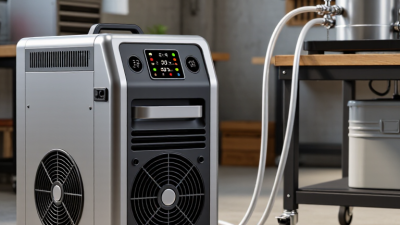
When choosing an air-cooled water chiller, inspect the controls before comparing cooling capacity. A clear touchscreen should show entering and leaving water temperatures, alarm history, compressor status, and fan operation. Keep it simple. Operators need useful information during a hot afternoon, not crowded menus. Ask whether setpoints can be locked and alerts can reach the maintenance team. Poorly designed controls can hide a rising condenser temperature until production suffers.
Maintenance access deserves equal attention. Open the service panels and inspect the internal layout, if possible. Can technicians reach filters, coils, sensors, and electrical terminals without removing half the machine? A washable coil screen may reduce dust buildup near a loading area. However, it still needs regular cleaning. I once underestimated rooftop dust and treated a dirty condenser as a minor issue. The chiller later ran longer, consumed more power, and became harder to diagnose. That mistake changed my inspection checklist.
System reliability depends on more than a strong compressor. Check flow protection, freeze protection, restart behavior, and alarm logging. Request operating limits for ambient temperature and water quality. Review service intervals, spare-part availability, and troubleshooting instructions. Test the unit after a power interruption, because real facilities rarely operate perfectly. Redundancy may help critical cooling, but extra equipment also increases maintenance work. Choose controls that support measured decisions, not just impressive specifications.
Choosing an air-cooled water chiller requires more than comparing purchase prices. Review the full lifecycle cost, including electricity, maintenance, water treatment, and refrigerant service. The International Energy Agency reports that cooling accounts for about 10% of global electricity use. Efficiency deserves serious attention. Check the unit’s rated efficiency under AHRI Standard 550/590 conditions, then compare performance at your actual load. Cheap equipment can become expensive quickly.
Safety must be visible in the specification. Confirm pressure protection, emergency shutoff controls, fan guards, electrical isolation, and refrigerant leak procedures. ASHRAE Standard 15 and ISO 5149 provide recognized guidance for refrigeration safety and system installation. Ask for documented testing, not vague assurances. Small details matter. Review noise levels, airflow clearance, winter operation, and access around service panels. A model that fits the plant room may still restrict maintenance access.
Supplier support can protect both uptime and budget. Request spare-parts lead times, technician availability, commissioning steps, and warranty response targets. The U.S. Department of Energy recommends evaluating equipment through energy performance and lifecycle economics, rather than initial cost alone. Ask the supplier to provide written calculations using your operating profile. My checklist is not perfect; predicted savings may differ from field results. Verify assumptions with measured temperatures, operating hours, and electrical tariffs. A practical supplier should accept those questions and help correct weak assumptions.